What is the density of MH Silicone Fluid at 25°C? - Methyl Hydrogen Silicone Fluid Factory
Methyl Hydrogen Silicone Fluid Factory
Methyl Hydrogen Silicone Fluid Factory
Methyl Hydrogen Silicone Fluid
Information Center
Everything you need to know about our products and company
Understanding Methyl Hydrogen Silicone Fluid: Density and Key Properties
Methyl Hydrogen Silicone Fluid (MH Silicone Fluid) is a specialized silicone-based material widely recognized for its versatility in industrial and commercial applications. At the heart of its functionality lies its unique physical and chemical properties, with density at 25°C being a critical parameter for engineers, manufacturers, and procurement teams.
Density of Methyl Hydrogen Silicone Fluid
The density of MH Silicone Fluid at 25°C typically ranges between 0.995–1.015 g/cm³, depending on the specific formulation and hydrogen content. This narrow range ensures consistent performance across industries, from construction to textiles. For instance, formulations with higher hydrogen content (e.g., 1.58% premium grade) often exhibit slightly higher density due to molecular structure variations .
Why Density Matters in MH Silicone Fluid Applications
Formulation Precision Density directly impacts mixing ratios in emulsions or crosslinking agents. For example, in waterproofing treatments for fabrics or ceramics, precise density measurements ensure uniform dispersion of active Si-H bonds, which are essential for forming durable, water-resistant films .
Material Compatibility In industries like construction or paper manufacturing, MH Silicone Fluid’s density influences its interaction with substrates. Its near-water-like density allows seamless integration into aqueous systems without compromising performance .
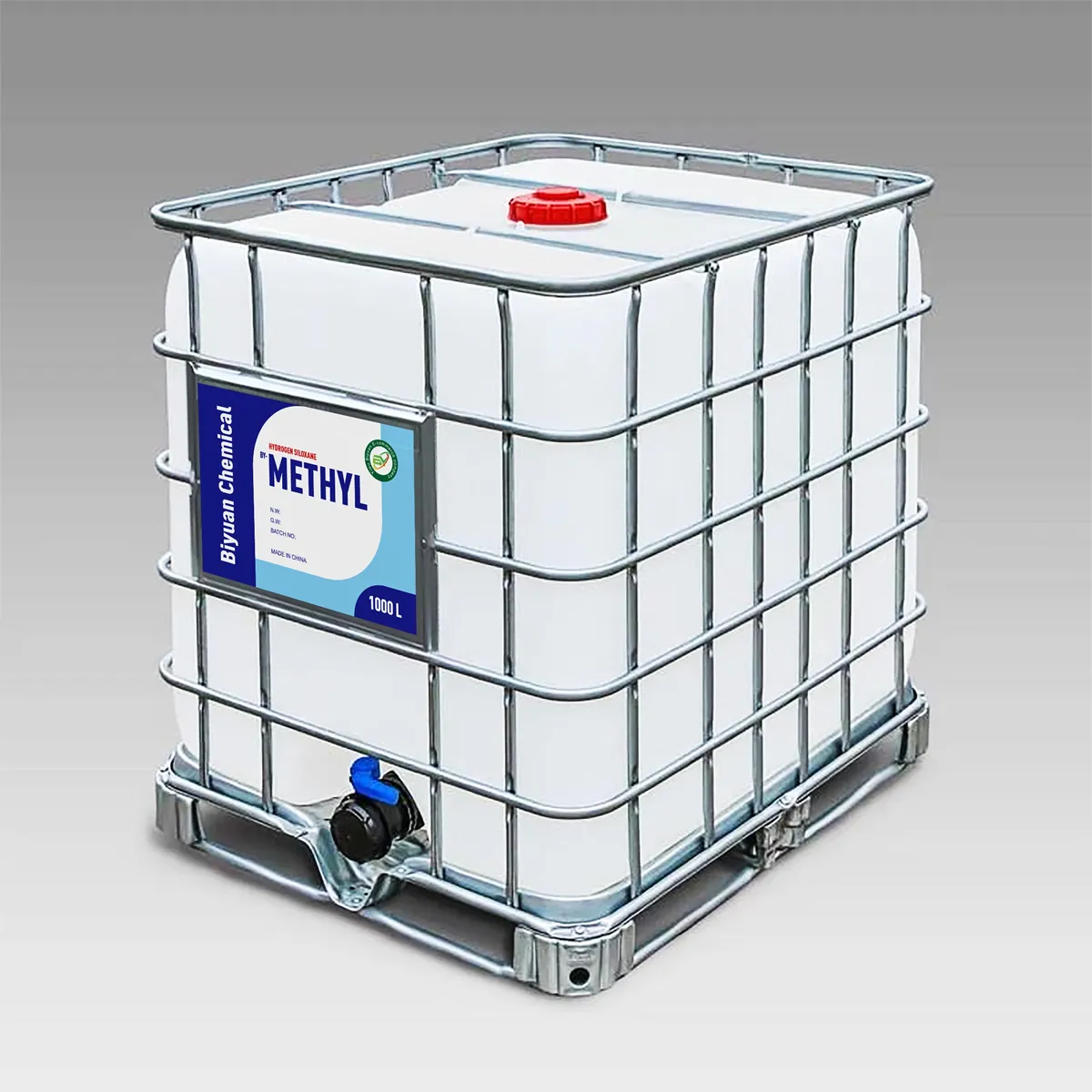
Transportation and Storage Knowing the density aids in calculating shipping volumes and selecting appropriate containers. Standard packaging (e.g., 200L plastic drums) leverages this property to optimize logistics and prevent leakage .
Technical Specifications Beyond Density
To fully leverage MH Silicone Fluid, consider these additional parameters:
Viscosity: 10–50 mm²/s at 25°C, ideal for applications requiring fluidity (e.g., textile lubrication) or controlled flow (e.g., sealants) .
Hydrogen Content: Ranges from 1.50% to 1.60%, determining crosslinking efficiency and reactivity .
Thermal Stability: Remains stable up to 300°C in dry conditions, making it suitable for high-temperature industrial processes .
Applications Highlighting Density and Performance
Waterproofing Solutions MH Silicone Fluid’s density enables uniform coating on porous materials like concrete or marble. When combined with catalysts, it forms a breathable, waterproof membrane—a key feature in Biyuan’s advanced construction sealants .
Textile and Paper Processing In textile manufacturing, the fluid’s density ensures even distribution during softening and waterproofing treatments. Similarly, in paper production, it acts as an anti-stick agent while maintaining surface integrity .
Silicone Rubber Formulations As a crosslinking agent in silicone rubber, density influences curing behavior and final product elasticity. Brands like Biyuan utilize this property to create high-performance adhesives for glass and metal bonding .
Choosing the Right Supplier
When sourcing MH Silicone Fluid, prioritize suppliers offering:
Consistency: Guaranteed density and viscosity across batches.
Customization: Options for adjusting hydrogen content or viscosity.
Sustainable Practices: Eco-friendly packaging and safe handling guidelines.
For instance, Biyuan’s silicone-based products adhere to international standards (e.g., ASTM C920) and emphasize safety and durability—critical factors for large-scale industrial applications .
Conclusion
Methyl Hydrogen Silicone Fluid’s density at 25°C is a foundational metric that underpins its efficacy in diverse industries. By understanding this property alongside related parameters, professionals can optimize formulations, enhance product performance, and select reliable suppliers. Whether in waterproofing, textiles, or construction, MH Silicone Fluid remains an indispensable material for modern innovation.
For specialized applications, consult industry experts to tailor MH Silicone Fluid specifications to your needs.
In the advanced chemistry of silicone materials, achieving predictable mechanical properties, thermal resilience, and long-term durability is fundamentally a process of controlled molecular architecture. For formulators developing addition-cure systems—from medical-grade gels and flexible adhesives to high-temperature seals and durable composites—the cross.
Methyl Hydrogen Silicone Fluid vs. Fluorosilicone Fluids: Key Advantages for Industrial Applications
In the world of specialized silicone fluids, manufacturers often face the critical choice between Methyl Hydrogen Silicone Fluid and fluorosilicone fluids. While both offer unique properties, understanding their comparative advantages is essential for .
Is Methyl Hydrogen Silicone Fluid a Game-Changer in Automotive Engineering?
The automotive industry demands materials that can withstand extreme conditions while maintaining performance and reliability. Methyl Hydrogen Silicone Fluid (MH Silicone Fluid) has emerged as a critical solution in modern vehicle design, offering unique properties that addres.
What Determines the Curing Time of Methyl Hydrogen Silicone Fluid?
Methyl Hydrogen Silicone Fluid (MH Silicone Fluid) is a versatile material widely used in industries such as textiles, construction, and personal care for its water-repellent and release-agent properties. One of the most critical factors for its application is understanding its curing .
Measuring Surface Tension of Methyl Hydrogen Silicone Fluid: Methods and Applications
Understanding Methyl Hydrogen Silicone Fluid
Methyl Hydrogen Silicone Fluid, also known as polymethylhydrogensiloxane, is a versatile organosilicon compound where some methyl groups in dimethyl silicone oil are replaced by hydrogen atoms. This chemical modification .
Methyl Hydrogen Silicone Fluid: A Critical Enabler for Advanced Aerospace Materials
In the demanding world of aerospace engineering, every component must withstand extreme conditions while contributing to overall performance and safety. Methyl Hydrogen Silicone Fluid has emerged as a critical specialty material enabling advancements in aerospace techn.
In the evolving landscape of industrial materials, Methyl Hydrogen Silicone Fluid (also known as Polymethylhydrosiloxane or PMHS) has emerged as a premier choice for waterproofing applications across diverse sectors. This specialized silicone polymer offers a unique combination of reactivity, durability, and versatility that sets it apart from convention.
Understanding Methyl Hydrogen Silicone Fluid (MH Silicone Fluid): Properties, Applications, and Industry Insights
Methyl Hydrogen Silicone Fluid (MH Silicone Fluid), chemically known as polymethylhydrosiloxane (PMHS), is a specialized silicone compound that has become indispensable across diverse industrial sectors. This fluid, characterized by its uni.
Proper Storage Solutions for Methyl Hydrogen Silicone Fluid: A Comprehensive Guide
Methyl Hydrogen Silicone Fluid (MH Silicone Fluid), a versatile polymer with high hydrogen content, is widely used in industries ranging from textiles and construction to cosmetics and electronics. Its unique properties—such as water repellency, thermal stability, and co.
What Are the Benefits of Methyl Hydrogen Silicone Fluid for Metal Surfaces?
Methyl Hydrogen Silicone Fluid (MH Silicone Fluid) has emerged as a game-changing solution in industrial applications, particularly for metal surface treatments. Its unique chemical properties and versatility make it indispensable across sectors like construction, automotive, .
How to Dispose of Methyl Hydrogen Silicone Fluid Safely: A Comprehensive Guide
Methyl Hydrogen Silicone Fluid (MH Silicone Fluid), a critical industrial lubricant and waterproofing agent, requires careful handling and disposal due to its environmental persistence and regulatory constraints. Improper disposal can lead to soil/water contamination, regula.
Unlocking Value: Bulk Discounts and Strategic Advantages of Methyl Hydrogen Silicone Fluid
In the competitive landscape of industrial chemicals, cost efficiency without compromising quality is a paramount concern for procurement managers and business owners. Methyl Hydrogen Silicone Fluid (PMHS) stands as a critical material in numerous manufacturing p.
In the precise engineering of silicone materials, achieving targeted mechanical, thermal, and environmental performance relies fundamentally on the strategic architecture of crosslinked networks. For formulators developing addition-cure silicone rubbers, adhesives, coatings, and specialized encapsulation systems, the selection of a crosslinking agent trans.
In the precise architecture of advanced silicone materials, the transition from fluid components to a resilient, cross-linked network hinges on a critical reactive partner. For developers of addition-cure silicones—from soft gels and flexible adhesives to durable seals and high-temperature composites—the crosslinker is not merely an additive but the essent.
Emerging Applications and Innovations in Methyl Hydrogen Silicone Fluid: A Market Shift Towards High-Performance Solutions
The global chemical industry is witnessing a significant transformation, driven by technological advancements and evolving regulatory landscapes. Within this dynamic environment, Methyl Hydrogen Silicone Fluid(PMHS) is experiencing .
Key Factors Influencing Methyl Hydrogen Silicone Fluid Adhesion and Performance
Methyl Hydrogen Silicone Fluid represents a specialized category of silicone polymers characterized by reactive silicon-hydrogen (Si-H) bonds within their molecular structure. This unique chemical composition provides both the stability of conventional methyl silicone oils a.
Mitigating Risks in Industrial Applications: The Hidden Costs of Over-Application
In industrial and commercial sectors, the pursuit of efficiency often leads to over-reliance on chemical solutions—a practice that can backfire dramatically. Methyl Hydrogen Silicone Fluid, a versatile silicone-based compound, exemplifies this dilemma. While it offers exc.
Enhancing Coating Adhesion: The Critical Role of Methyl Hydrogen Silicone Fluid
In the realm of industrial coatings, achieving robust adhesion between the coating layer and substrate is paramount for durability, weather resistance, and aesthetic longevity. Methyl Hydrogen Silicone Fluid (MHFS), a versatile organosilicon compound, has emerged as a game-.
How to Achieve Optimal Mixing of Methyl Hydrogen Silicone Fluid with Solvents
Methyl Hydrogen Silicone Fluid (MH Silicone Fluid) is a versatile organosilicon compound widely used in industries ranging from construction to textiles due to its exceptional hydrophobic properties and chemical stability. Mixing it with solvents requires careful consideratio.
Understanding the Viscosity Range of Methyl Hydrogen Silicone Fluid
Methyl Hydrogen Silicone Fluid (MH Silicone Fluid) is a versatile polymer widely recognized for its unique balance of reactivity and stability. Among its critical properties, viscosity plays a pivotal role in determining its suitability for diverse industrial applications. This article.
Exploring the Role of Methyl Hydrogen Silicone Fluid in Sustainable Catalysis
In the quest for greener industrial processes, catalyst innovation has taken center stage. Catalysts drive efficiency in chemical reactions, but their performance often hinges on the carrier material—a component that anchors active sites while influencing stability, reactivity.
Thermal Stability of Methyl Hydrogen Silicone Fluid: Effective Mitigation Strategies
Introduction to Thermal Degradation
Methyl Hydrogen Silicone Fluid (PMHS) is a versatile silicone-based material valued for its unique molecular structure containing active Si-H bonds. These bonds, while enabling various beneficial chemical reactions, also present .
Understanding How PMHS Elevates Thermal Resilience in Modern Motor Oils
For drivers and automotive enthusiasts, the phrase “heat is the enemy” isn’t just a catchy saying—it’s a reality. Modern engines operate at higher temperatures than ever, thanks to turbocharging, downsizing, and high-performance demands. This constant exposure to extreme heat can de.
On July 14, KCC hosted the inaugural Robotics Technology Exchange Seminar at its R&D center located in Giheung-gu, Yongin-si, South Korea. The event brought together the research team led by Professor Park Yongrae from the Robotics Research Institute of Seoul National University, alongside researchers and technical specialists from both parties. Roughl.
The Indian textile industry is undergoing a significant transformation as manufacturers increasingly adopt Poly Methyl Hydrogen Silicone (PMHS) technology to produce high-performance waterproof fabrics. This shift represents a strategic response to growing market demand for functional textiles that combine water resistance with breathability, durability, a.
Polymethylhydrosiloxane (PMHS), commonly known as Methyl Hydrogen Silicone Fluid, and dimethyl silicone oil are two important organosilicon compounds with distinct properties and applications. While they share a basic silicone-oxygen backbone, the presence of reactive silicon-hydrogen (Si-H) bonds in PMHS fundamentally differentiates its performance and fu.
A Versatile Performer in Performance Within the realm of polymer materials, high hydrogen-containing silicone oil appears unremarkable yet boasts extraordinary capabilities. It is a colorless transparent liquid. Thanks to active Si–H bonds on its molecular chain, it can undergo low-temperature crosslinking with a wide range of chemical substances under the.
According to information from the China National Intellectual Property Administration (CNIPA), a company recently filed a patent entitled Low Viscosity, Low Cyclosiloxane α,ω Dihydrogen Terminated Polydimethylsiloxane and Its Preparation Method. The publication number is CN122563083A, the application number is CN202610961581.8, the publication date is Augu.
Methyl Hydrogen Silicone Fluid vs. Fluorosilicone: Which Delivers Unmatched Waterproofing Performance?
Waterproofing is a critical requirement across industries—from construction to textiles and electronics. Two materials often compared for their hydrophobic properties are methyl hydrogen silicone fluid and fluorosilicone. While both offer water-re.
Introduction
Methyl Hydrogen Silicone Fluid (CAS No. 63148-57-2), also known as methyl hydrogen polysiloxane or PMHS, is a highly versatile silicone fluid widely used across multiple industries for its exceptional water repellency, thermal stability, and crosslinking capabilities. This clear, odorless liquid contains active silicon-hydrogen (Si-H) bonds.
The convergence of Industry 4.0 and advanced materials like Methyl Hydrogen Silicone Fluid (PMHS) is revolutionizing the waterproofing industry. This transformation is driven by the integration of cyber-physical systems, IoT, and data analytics into manufacturing and application processes, leading to unprecedented levels of efficiency, quality, and sustain.
In the rapidly evolving global chemical industry, Methyl Hydrogen Silicone Fluid (PMHS) stands as a critical material with diverse applications across textiles, automotive, construction, and personal care sectors. As we approach 2026, the market for PMHS is projected to reach USD 0.36 billion, growing at a CAGR of 9% between 2025 and 2034. This growth traj.
Understanding PMHS Viscosity: Selecting the Optimal Grade for Industrial Applications
Introduction
Polymethylhydrosiloxane (PMHS), commonly known as Methyl Hydrogen Silicone Fluid, is a versatile organosilicon compound with unique properties that make it invaluable across numerous industries. The viscosity of PMHS plays a crucial role in determining .
The 2025 Sustainability Awards represent a pivotal moment for the chemical industry, particularly for manufacturers of Methyl Hydrogen Silicone Fluid (PMHS). As global demand for sustainable solutions intensifies, these awards recognize companies that are pioneering eco-friendly production methods, reducing environmental impact, and advancing green technol.
The global shipping landscape for Methyl Hydrogen Silicone Fluid (PMHS) faces unprecedented challenges in 2025, driven by complex logistics disruptions and volatile tariff policies. As the market for this essential chemical compound continues to expand—projected to reach USD 520 million by 2031 with an 8.5% CAGR—supply chain professionals must navigate a p.
Reaction Mechanism
The addition-curing system relies on platinum-catalyzed hydrosilylation reaction. The Si-CH=CH₂ groups on vinyl silicone oil (base gum) react with the Si-H bonds of hydrogen-containing silicone oil to form crosslinks. No small molecules volatilize and no byproducts are generated during the reaction, which can be cured at ambient tempe.
Optimizing Industrial Cooling Efficiency: How Methyl Hydrogen Silicone Fluid Drives Energy Savings
In today’s energy-conscious industrial landscape, cooling systems account for a staggering 30-50% of total energy consumption in facilities like manufacturing plants, data centers, and chemical refineries. For operators, rising utility costs and regulator.
Flash Point Analysis: Critical Safety Protocols for Handling Methyl Hydrogen Silicone Fluid
Methyl Hydrogen Silicone Fluid (MHSF) represents a specialized category of silicone polymers characterized by reactive silicon-hydrogen (Si-H) bonds within their molecular structure. These fluids serve as crucial components across diverse industrial sectors, in.
Global Surge in Methyl Hydrogen Silicone Fluid Demand Driven by Green Technology and Electronics
The global market for Polymethylhydrosiloxane (PMHS), commonly known as Methyl Hydrogen Silicone Fluid, is experiencing a significant upswing in 2025. This versatile organic silicone polymer, renowned for its exceptional thermal stability, chemical inertness.
According to in-depth research by WENKH, hydrogen-containing silicone oils are classified into six grades based on hydrogen content: 0.01%–0.36%, 0.36%–0.5%, 0.5%–1%, 1%–1.5%, 1.5%–1.6%, and above 1.6%.
Among all grades, products with hydrogen content ranging from 1.5% to 1.6% represent the largest market segment, accounting for approximately 81% of tot.
Methyl hydrogen siloxane serves as a multifunctional additive that significantly improves processing characteristics and final properties in silicone rubber applications. This specialized silicone fluid features reactive Si-H groups that enable efficient cross-linking through hydrosilylation reactions with vinyl-functionalized silicone rubbers.
.
Medical-grade Methyl hydrogen siloxane serves as a versatile functional material in healthcare applications, combining high purity with reactive Si-H groups for enhanced performance. This specialized silicone fluid enables precise cross-linking in implantable devices, provides controlled drug release matrices, and creates anti-fouling surface coa.
Methyl hydrogen siloxane serves as a versatile functional additive in personal care products, leveraging its unique Si-H reactivity and silicone properties to deliver enhanced performance across various applications. This specialized material acts as an effective cross-linker in hair care products, creating durable yet flexible films that provide.
Methyl hydrogen siloxane serves as a innovative processing aid that enhances both the efficiency of leather manufacturing and the quality of finished products. This reactive silicone fluid improves leather softness and flexibility through effective fiber lubrication and molecular-level modification. Its unique chemical properties enable superior .
Contact Us
We're here to help with any questions or inquiries you may have
Contact Information
Address
No. 116, Jiangdong Street, Yiwu City, Jinhua City, Zhejiang Province,China