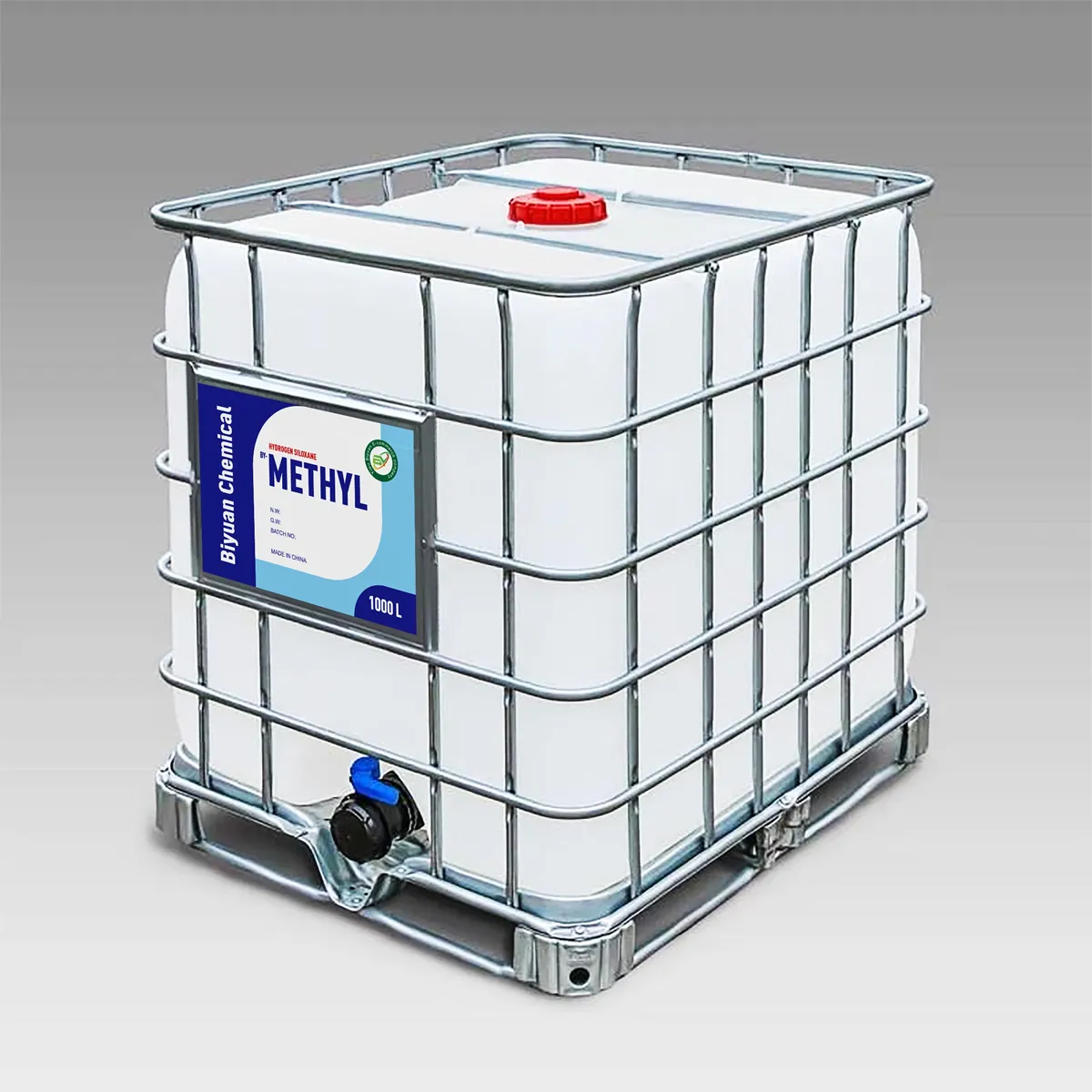
How to verify the purity of MH Silicone Fluid? - Methyl Hydrogen Silicone Fluid Factory
Methyl Hydrogen Silicone Fluid Factory
Methyl Hydrogen Silicone Fluid
Information Center
Everything you need to know about our products and company
Ensuring Quality: How to Verify the Purity of Methyl Hydrogen Silicone Fluid
In the industrial and chemical sectors, the purity of Methyl Hydrogen Silicone Fluid is paramount for performance and safety. This versatile organosilicon polymer, known for its reactive Si-H bonds and hydrophobic properties, is critical in textiles, cosmetics, electronics, and construction. Verifying its purity requires a multi-faceted approach, combining simple tests with advanced analytical techniques. For B2B buyers and manufacturers, ensuring you source high-purity material from a reliable Methyl Hydrogen Silicone Fluid factory is essential for product integrity.
Key Methods for Verifying Purity
Physical Inspection and Simple Tests Begin with a visual inspection. Pure MH Silicone Fluid is typically a colorless, transparent oily liquid free of mechanical impurities or separation . A simple “pinch test” (used for silicone products) can offer a preliminary indication: pure material should not turn white when pinched and should return to its original shape after stretching, indicating a lack of fillers . Additionally, pure silicone usually has no strong chemical odor; a pronounced smell may suggest additives .
Boiling and Melting Point Consistency A fundamental property of a pure substance is a sharp, constant boiling point. Pure MH Silicone Fluid has a defined boiling point (around 142°C ). If the liquid boils over a temperature range, it likely contains impurities that alter its vaporization behavior . Similarly, a pure substance will melt over a very narrow temperature range (often within 1°C), which can be assessed using a melting point apparatus .
Chromatography Analysis Chromatography is a powerful tool for identifying components in a mixture. Techniques like Gas Chromatography (GC) or High-Performance Liquid Chromatography (HPLC) can separate the individual substances within a sample. A pure MH Silicone Fluid will typically show a single, consistent band or peak, whereas impurities will manifest as additional bands or peaks .
Advanced Spectroscopic Techniques For definitive verification, advanced methods are employed:
FTIR (Fourier-Transform Infrared Spectroscopy): Identifies specific functional groups (like Si-H bonds) and can detect organic impurities .
NMR (Nuclear Magnetic Resonance): Provides detailed information about the molecular structure and can confirm the presence and ratio of expected groups while identifying unexpected ones . These techniques are highly accurate for confirming molecular identity and purity.
Verification of Technical Specifications Reputable suppliers provide detailed specifications. Compare the product’s key parameters against standard values for pure MH Silicone Fluid:
Hydrogen Content: A critical indicator, typically between 1.50% – 1.65% .
Viscosity (at 25°C): Often falls within 20-40 mm²/s .
Density (at 25°C): Usually between 0.995 – 1.015 g/cm³ . Consistent batch-to-batch results on these parameters from a Methyl Hydrogen Silicone Fluid factory indicate good quality control.
Industry Standards, Certifications, and the Importance of Factory Source
Verifying purity isn’t just about testing the product; it’s also about vetting the source. A trustworthy Methyl Hydrogen Silicone Fluid factory will adhere to international standards and hold relevant certifications, which are your first line of defense against impurities.
Certifications Matter: Look for factories certified under ISO 9001 (Quality Management) and ISO 14001 (Environmental Management) . Some may also provide SGS reports, offering independent verification of product specifications .
Understanding Industry Standards: Products may be manufactured according to standards like HG/T 4804-2015 or specific enterprise standards (e.g., Q/LXAX 14-2005 ). A reliable factory will be transparent about the standards its products meet.
FDA Compliance for Specific Uses: While “food grade” doesn’t always mean 100% pure , compliance with FDA standards for indirect food additives is crucial for applications in cosmetics or food-processing equipment lubricants . Factories serving these industries should provide evidence of compliance.
Market Context and Application-Based Purity Needs
The required level of purity can depend on the application:
Textiles and Waterproofing: For fabric waterproofing, the fluid’s reactivity (Si-H content) is vital for forming durable, breathable films. Impurities can hinder cross-linking, reducing water repellency and fabric strength enhancement .
Electronics and Cosmetics: In electronics packaging or cosmetics, even trace impurities can affect performance (e.g., reducing insulation resistivity) or cause skin irritation. High-purity material is non-toxic and ensures product safety and efficacy .
Construction Materials: When used for waterproofing cement, marble, or ceramics, purity ensures long-term stability and resistance to weathering without causing degradation or discoloration .
Biyuan: Your Partner for High-Purity Methyl Hydrogen Silicone Fluid
Navigating the market for high-purity MH Silicone Fluid can be a challenge. Biyuan stands out as a dedicated manufacturer committed to solving core customer pain points: consistency, performance, and reliability.
Our Methyl Hydrogen Silicone Fluid is produced under stringent quality control processes in our advanced factory. We understand that your industrial processes demand nothing less than exceptional quality. Every batch of our product is rigorously tested to ensure key specifications like hydrogen content, viscosity, and density consistently meet high standards, providing you with a reliable foundation for your formulations.
Whether you are developing high-performance textiles, durable construction materials, sensitive electronic components, or premium cosmetics, Biyuan provides the pure, high-quality base material you need. Explore the difference a trusted supplier can make for your production outcomes.
Methyl Hydrogen Silicone Fluid (MH Silicone Fluid) has emerged as a critical material in industries ranging from textiles to electronics due to its unique properties, such as thermal stability, water repellency, and chemical inertness. However, concerns about volatile organic compound (VOC) emissions during its production, application, and disposal have sp.
Understanding the Shelf Life of Methyl Hydrogen Silicone Fluid
Methyl Hydrogen Silicone Fluid (MH Silicone Fluid) is a versatile industrial chemical widely used in applications ranging from waterproofing treatments to textile finishes. One of the most critical factors for its effective use is understanding its shelf life and how to preserve its perform.
Methyl Hydrogen Silicone Fluid (MH Fluid), a versatile organosilicon polymer with reactive Si-H bonds, is widely used in industries ranging from textiles to electronics. However, its unique chemical properties demand strict adherence to Health, Safety, and Environmental (HSE) protocols to mitigate risks and ensure sustainable operations. This guide explore.
In the evolving landscape of industrial materials, Methyl Hydrogen Silicone Fluid (also known as Polymethylhydrosiloxane or PMHS) has emerged as a premier choice for waterproofing applications across diverse sectors. This specialized silicone polymer offers a unique combination of reactivity, durability, and versatility that sets it apart from convention.
Spills and leaks, whether from industrial processes, household accidents, or natural disasters, pose significant risks to safety, property, and the environment. Proper handling requires a strategic approach to mitigate damage and ensure compliance with safety regulations. This guide outlines actionable steps for managing spills or leaks, with a focus on le.
Exploring the Role of Methyl Hydrogen Silicone Fluid in Cosmetic Formulations
Methyl Hydrogen Silicone Fluid (MH Silicone Fluid) has emerged as a versatile ingredient in the cosmetic industry, offering unique benefits that enhance product performance and stability. This high-purity organosilicon compound, characterized by its reactive Si-H bonds, is pa.
Comprehensive Guide to REACH Compliance for Methyl Hydrogen Silicone Fluid
Methyl Hydrogen Silicone Fluid (MH Silicone Fluid) is a versatile chemical widely used in industries such as textiles, construction, and personal care for its water-repellent and thermal stability properties. However, its production, distribution, and use within the European Uni.
What Makes Methyl Hydrogen Silicone Fluid a Game-Changer in Waterproofing?
Waterproofing is a cornerstone of modern construction and material science, where innovation meets practicality. Among the array of waterproofing agents, Methyl Hydrogen Silicone Fluid (MHFS) stands out for its unique chemical properties and versatility. This article explore.
Mitigating Risks in Industrial Applications: The Hidden Costs of Over-Application
In industrial and commercial sectors, the pursuit of efficiency often leads to over-reliance on chemical solutions—a practice that can backfire dramatically. Methyl Hydrogen Silicone Fluid, a versatile silicone-based compound, exemplifies this dilemma. While it offers exc.
Ensuring Quality: How to Verify the Purity of Methyl Hydrogen Silicone Fluid
In the industrial and chemical sectors, the purity of Methyl Hydrogen Silicone Fluid is paramount for performance and safety. This versatile organosilicon polymer, known for its reactive Si-H bonds and hydrophobic properties, is critical in textiles, cosmetics, electronics, .
The Film-Forming Process of Methyl Hydrogen Silicone Fluid: A Comprehensive Guide
Introduction to Methyl Hydrogen Silicone Fluid
Methyl Hydrogen Silicone Fluid (PMHS) represents a unique category of silicone polymers characterized by active Si-H bonds in their molecular structure. Unlike conventional dimethyl silicone oils, this specialized fluid p.
Methyl Hydrogen Silicone Fluid vs. Fluorosilicone Fluids: Key Advantages for Industrial Applications
In the world of specialized silicone fluids, manufacturers often face the critical choice between Methyl Hydrogen Silicone Fluid and fluorosilicone fluids. While both offer unique properties, understanding their comparative advantages is essential for .
Methyl Hydrogen Silicone Fluid: A Critical Enabler for Advanced Aerospace Materials
In the demanding world of aerospace engineering, every component must withstand extreme conditions while contributing to overall performance and safety. Methyl Hydrogen Silicone Fluid has emerged as a critical specialty material enabling advancements in aerospace techn.
Innovations Shaping MH Silicone Fluid R&D
The global Methyl Hydrogen Silicone Fluid market is undergoing a significant transformation, driven by advanced material demands across textiles, electronics, automotive, and construction industries. With the market projected to reach an estimated $0.6 billion by 2031, registering a CAGR of 8.5%, innovation .
How Methyl Hydrogen Silicone Fluid Is Adapting to Sustainability Demands
The global chemical industry is undergoing a profound transformation driven by sustainability imperatives, and Methyl Hydrogen Silicone Fluid(MH Silicone Fluid) is at the forefront of this shift. As a versatile silicone polymer critical to industries from textiles to electronics, t.
Understanding SDS Requirements for Methyl Hydrogen Silicone Fluid
Methyl Hydrogen Silicone Fluid (MH Silicone Fluid) is a specialized chemical widely used in industries such as textiles, electronics, and coatings due to its unique reactivity and stability. Ensuring compliance with Safety Data Sheet (SDS) requirements is critical for safe handling, stor.
MH Silicone Fluid: The Unsung Hero in Tire Manufacturing Efficiency
In the highly competitive tire manufacturing industry, efficiency, precision, and quality are paramount. Methyl Hydrogen Silicone Fluid (PMHS), a versatile silicone polymer, has emerged as a critical specialty chemical in this sector, particularly as a high-performance release agent. I.
Key Applications of Methyl Hydrogen Silicone Fluid Across Industries
Methyl Hydrogen Silicone Fluid (MH Silicone Fluid) has emerged as a versatile and high-performance material, driven by its unique chemical structure and reactive properties. Its ability to form durable hydrophobic coatings, enhance thermal stability, and improve material compatibility.
In the world of construction materials, concrete durability remains a paramount concern for engineers, architects, and builders. While concrete is renowned for its strength, its porous nature makes it vulnerable to water infiltration, chemical attacks, and environmental degradation. This is where Methyl Hydrogen Silicone Fluid emerges as a transforma.
Methyl Hydrogen Silicone Fluid (MH Silicone Fluid) is a versatile material widely used in industries ranging from textiles and electronics to pharmaceuticals and construction. To ensure its safety, performance, and compliance with global standards, manufacturers and suppliers must obtain specific certifications. Below, we explore the critical certification.
Optimizing Industrial Cooling Efficiency: How Methyl Hydrogen Silicone Fluid Drives Energy Savings
In today’s energy-conscious industrial landscape, cooling systems account for a staggering 30-50% of total energy consumption in facilities like manufacturing plants, data centers, and chemical refineries. For operators, rising utility costs and regulator.
Thermal Stability of Methyl Hydrogen Silicone Fluid: Effective Mitigation Strategies
Introduction to Thermal Degradation
Methyl Hydrogen Silicone Fluid (PMHS) is a versatile silicone-based material valued for its unique molecular structure containing active Si-H bonds. These bonds, while enabling various beneficial chemical reactions, also present .
Beyond Traditional Silicones: How Methyl Hydrogen Silicone Fluid Drives Sustainable Cosmetic Innovation
In an era where “clean beauty” and “eco-conscious formulation” have shifted from niche demands to industry norms, cosmetic developers face a pressing challenge: balancing performance with planetary responsibility. As consumers .
The global chemical industry is undergoing a transformative shift toward sustainable manufacturing, and suppliers of Polymethylhydrosiloxane (PMHS), commonly known as Methyl Hydrogen Silicone Fluid, are at the forefront of this change. Through strategic localization of production and technological innovation, these companies are significantly reducing thei.
The Middle East is undergoing an unprecedented construction renaissance, with mega-projects transforming the region’s landscape and creating massive demand for high-performance building materials. At the heart of this infrastructure boom is Methyl Hydrogen Silicone Fluid (PMHS), a versatile silicone-based compound that plays a critical role in modern.
How the Pandemic Reshaped Medical Packaging: The Rise of Methyl Hydrogen Silicone Fluid
The COVID-19 pandemic served as a pivotal moment for the global healthcare industry, triggering unprecedented demand for advanced medical packaging solutions. At the heart of this transformation lies Methyl Hydrogen Silicone Fluid (PMHS), a specialized silicone polym.
Understanding PMHS Viscosity: Selecting the Optimal Grade for Industrial Applications
Introduction
Polymethylhydrosiloxane (PMHS), commonly known as Methyl Hydrogen Silicone Fluid, is a versatile organosilicon compound with unique properties that make it invaluable across numerous industries. The viscosity of PMHS plays a crucial role in determining .
Methyl Hydrogen Silicone Fluid, known in the scientific community by its CAS registry number 63148-57-2, represents a remarkable class of organosilicon compounds with unique properties and diverse industrial applications. This chemical workhorse, also called polymethylhydrosiloxane, has established itself as an indispensable material across sectors rang.
The Critical Role of 1.59% Hydrogen Content in PMHS for Enhanced Waterproofing
Introduction
In the specialized world of silicone chemistry, the hydrogen content in polymethylhydrosiloxane (PMHS) serves as a crucial indicator of performance potential, particularly for waterproofing applications. While PMHS is widely recognized for its water-repellent .
Polymethylhydrosiloxane (PMHS), commonly known as Methyl Hydrogen Silicone Fluid, and dimethyl silicone oil are two important organosilicon compounds with distinct properties and applications. While they share a basic silicone-oxygen backbone, the presence of reactive silicon-hydrogen (Si-H) bonds in PMHS fundamentally differentiates its performance and fu.
Innovations in Low-VOC Methyl Hydrogen Silicone Fluid for Global Compliance
Introduction
The global demand for environmentally responsible chemical solutions is transforming the specialty chemicals sector. Methyl hydrogen silicone fluid (PMHS), a versatile organosilicon compound, is undergoing significant reformulation to meet increasingly stringen.
Polymethylhydrosiloxane: Advancing Solar Technology Through Innovative Materials
Introduction: The Unsung Hero of Solar Panel Efficiency
In the rapidly evolving solar energy sector, material innovations play a critical role in enhancing panel performance and durability. Among these advancements, polymethylhydrosiloxane (PMHS), also known as methyl hy.
The Indian textile industry is undergoing a significant transformation as manufacturers increasingly adopt Poly Methyl Hydrogen Silicone (PMHS) technology to produce high-performance waterproof fabrics. This shift represents a strategic response to growing market demand for functional textiles that combine water resistance with breathability, durability, a.
Introduction
Methyl Hydrogen Silicone Fluid (CAS No. 63148-57-2), also known as methyl hydrogen polysiloxane or PMHS, is a highly versatile silicone fluid widely used across multiple industries for its exceptional water repellency, thermal stability, and crosslinking capabilities. This clear, odorless liquid contains active silicon-hydrogen (Si-H) bonds.
Executive Summary
The global methyl hydrogen silicone fluid market is experiencing significant transformation, with China emerging as the dominant force in production and supply chain dynamics. This versatile material, known for its exceptional thermal stability, water repellency, and lubrication properties, has become indispensable across diverse indus.
Introduction
Methyl Hydrogen Silicone Fluid, an organic silicon polymer containing active silicon-hydrogen (Si-H) bonds, has gained significant attention for its unique combination of reactivity and stability. This versatile material, with its molecular structure featuring both methyl groups (-CH₃) and active Si-H bonds, demonstrates exceptional perfor.
Flash Point Analysis: Critical Safety Protocols for Handling Methyl Hydrogen Silicone Fluid
Methyl Hydrogen Silicone Fluid (MHSF) represents a specialized category of silicone polymers characterized by reactive silicon-hydrogen (Si-H) bonds within their molecular structure. These fluids serve as crucial components across diverse industrial sectors, in.
The convergence of Industry 4.0 and advanced materials like Methyl Hydrogen Silicone Fluid (PMHS) is revolutionizing the waterproofing industry. This transformation is driven by the integration of cyber-physical systems, IoT, and data analytics into manufacturing and application processes, leading to unprecedented levels of efficiency, quality, and sustain.
In the rapidly evolving global chemical industry, Methyl Hydrogen Silicone Fluid (PMHS) stands as a critical material with diverse applications across textiles, automotive, construction, and personal care sectors. As we approach 2026, the market for PMHS is projected to reach USD 0.36 billion, growing at a CAGR of 9% between 2025 and 2034. This growth traj.
Methyl Hydrogen Silicone Fluid: Certifications and Compliance for Sustainable Construction
Introduction to Green Building Materials and PMHS
The global construction industry is undergoing a fundamental transformation toward sustainability, driven by increasingly stringent environmental regulations and growing consumer demand for eco-friendly building.
Methyl hydrogen siloxane serves as a multifunctional additive that significantly improves processing characteristics and final properties in silicone rubber applications. This specialized silicone fluid features reactive Si-H groups that enable efficient cross-linking through hydrosilylation reactions with vinyl-functionalized silicone rubbers.
.
Medical-grade Methyl hydrogen siloxane serves as a versatile functional material in healthcare applications, combining high purity with reactive Si-H groups for enhanced performance. This specialized silicone fluid enables precise cross-linking in implantable devices, provides controlled drug release matrices, and creates anti-fouling surface coa.
Methyl hydrogen siloxane serves as a versatile functional additive in personal care products, leveraging its unique Si-H reactivity and silicone properties to deliver enhanced performance across various applications. This specialized material acts as an effective cross-linker in hair care products, creating durable yet flexible films that provide.
Methyl hydrogen siloxane serves as a innovative processing aid that enhances both the efficiency of leather manufacturing and the quality of finished products. This reactive silicone fluid improves leather softness and flexibility through effective fiber lubrication and molecular-level modification. Its unique chemical properties enable superior .

Contact Us
We're here to help with any questions or inquiries you may have
Contact Information
Address
No. 116, Jiangdong Street, Yiwu City, Jinhua City, Zhejiang Province,China