How to Safely Handle Methyl Hydrogen Silicone Fluid: A Comprehensive HSE Guide - Methyl Hydrogen Silicone Fluid Factory
Methyl Hydrogen Silicone Fluid Factory
Methyl Hydrogen Silicone Fluid
Information Center
Everything you need to know about our products and company
Methyl Hydrogen Silicone Fluid (MH Fluid), a versatile organosilicon polymer with reactive Si-H bonds, is widely used in industries ranging from textiles to electronics. However, its unique chemical properties demand strict adherence to Health, Safety, and Environmental (HSE) protocols to mitigate risks and ensure sustainable operations. This guide explores critical HSE considerations for MH Fluid, tailored for manufacturers, distributors, and end-users.
1. Health and Safety: Mitigating Exposure Risks
MH Fluid’s Si-H bonds and hydrophobic characteristics require careful handling to avoid health hazards:
Toxicity and Irritation: While non-toxic, prolonged skin contact may cause mild irritation. Always wear chemical-resistant gloves (e.g., nitrile) and splash-proof goggles during handling .
Respiratory Protection: Inhaling aerosols or vapors in confined spaces can lead to respiratory discomfort. Use NIOSH-approved respirators in high-exposure scenarios .
Fire Safety: MH Fluid has a flashpoint above 160°C, but its decomposition products (e.g., formaldehyde) during combustion pose inhalation risks. Equip facilities with CO₂ or dry chemical fire extinguishers .
Best Practices:
Train staff on emergency protocols for spills or accidental ingestion.
Store in cool, ventilated areas away from oxidizers or strong acids to prevent unintended reactions .
MH Fluid’s persistence in ecosystems necessitates proactive environmental safeguards:
Aquatic Toxicity: Classified as harmful to aquatic life (H411), even small discharges can disrupt ecosystems. Implement secondary containment systems to prevent leaks into waterways .
Waste Management: Dispose of contaminated materials through licensed hazardous waste handlers. Avoid direct discharge into sewers or landfills .
Biodegradability: While MH Fluid is not readily biodegradable, some manufacturers offer eco-friendly alternatives with reduced environmental footprints .
Regulatory Alignment:
Comply with REACH and TSCA regulations for chemical reporting and waste disposal.
Adopt closed-loop systems in production to minimize waste generation .
3. Operational Efficiency: Optimizing Usage and Storage
Proper handling ensures both safety and cost-effectiveness:
Viscosity Control: MH Fluid’s viscosity ranges from 1.5 to 1000 cSt, depending on hydrogen content. Regularly calibrate equipment to maintain consistent performance .
Catalyst Compatibility: When used as a crosslinking agent, ensure compatibility with platinum catalysts (e.g., Karstedt catalysts) to avoid premature curing .
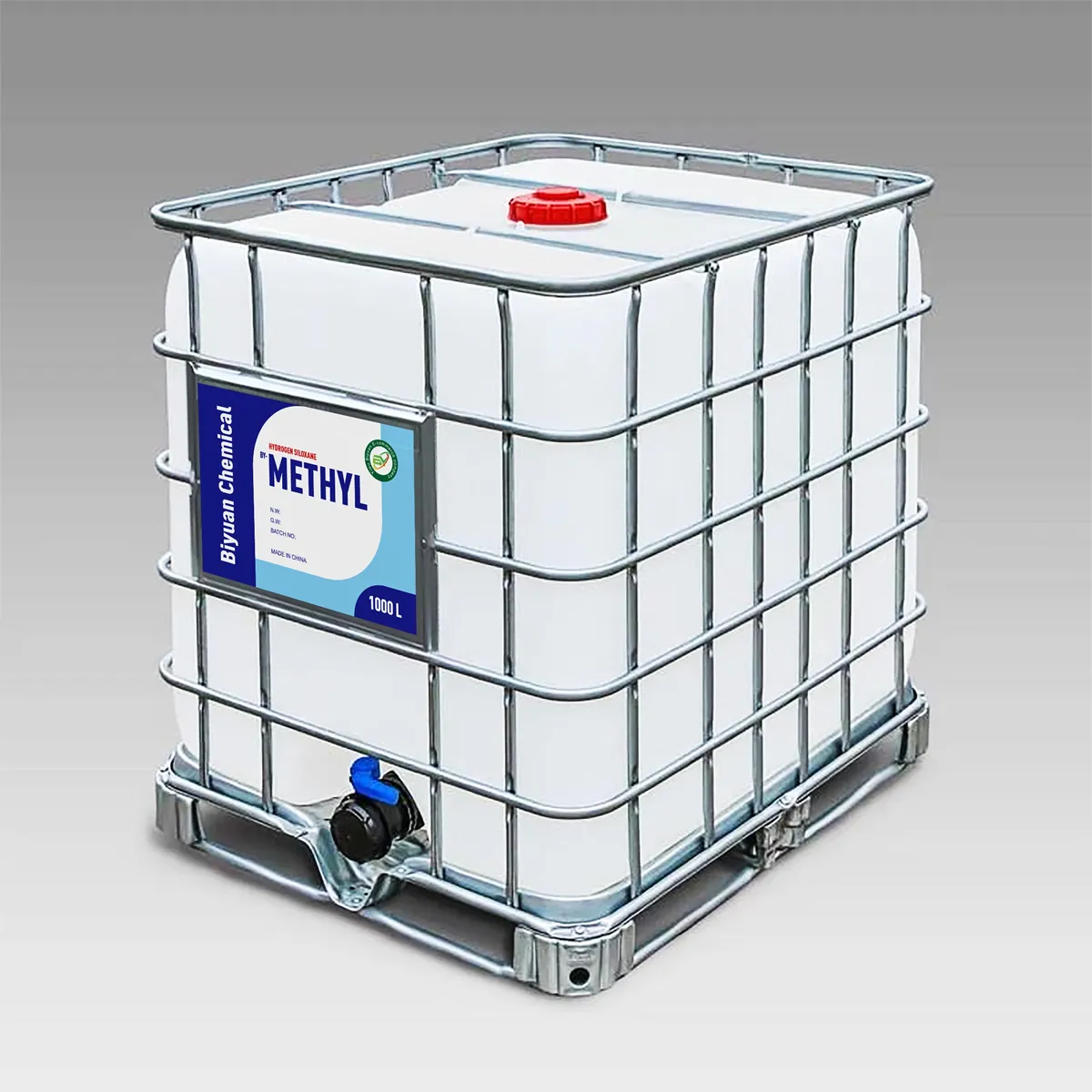
Packaging: Use airtight containers (e.g., 200kg iron drums) to prevent moisture contamination, which can degrade Si-H bonds .
Supplier Insights:
Leading manufacturers like Biyuan offer customized MH Fluid formulations with tailored hydrogen content (0.1%–1.6%) to meet specific industrial needs, ensuring compatibility with diverse applications .
Prepare for spills or exposures with clear guidelines:
Spill Containment: Use inert absorbents (e.g., silica gel) to neutralize spills. Avoid water rinsing, as MH Fluid may disperse contaminants .
Medical Assistance: For skin contact, rinse thoroughly with water; for eye exposure, flush with saline solution for 15 minutes .
Documentation: Maintain SDS (Safety Data Sheets) accessible to all personnel, detailing hazard symbols and emergency contacts .
5. Sustainability and Innovation: Future-Proofing Practices
As industries shift toward greener solutions, MH Fluid users can adopt:
Recycling Programs: Partner with suppliers like Biyuan to recycle residual fluids, reducing raw material waste.
Process Optimization: Integrate closed-loop systems to recover and reuse MH Fluid in applications like textile waterproofing or silicone rubber curing .
Supplier Collaboration: Source from certified eco-conscious manufacturers that prioritize low-VOC formulations and energy-efficient production .
Why Partner with Biyuan?
As a trusted Methyl Hydrogen Silicone Fluid supplier, Biyuan combines technical expertise with a commitment to sustainability. Their products adhere to global safety standards and offer:
Custom Formulations: Adjust hydrogen content and viscosity for niche applications like release agents or anti-caking treatments .
Global Logistics: Efficient distribution networks ensure timely delivery to industries in North America, Asia-Pacific, and Europe .
Technical Support: Dedicated teams assist with formulation optimization and compliance audits.
By integrating Biyuan’s MH Fluid into your operations, you gain a reliable partner that aligns with HSE principles while driving innovation in waterproofing, electronics, and beyond.
Conclusion
Navigating HSE challenges with MH Fluid requires a blend of technical knowledge, proactive measures, and strategic partnerships. Whether you’re a textile manufacturer seeking water-repellent solutions or an electronics producer requiring crosslinking agents, prioritizing safety and sustainability will future-proof your operations. Explore Biyuan’s tailored MH Fluid offerings to elevate efficiency and compliance in your supply chain.
Understanding Methyl Hydrogen Silicone Fluid: Density and Key Properties
Methyl Hydrogen Silicone Fluid (MH Silicone Fluid) is a specialized silicone-based material widely recognized for its versatility in industrial and commercial applications. At the heart of its functionality lies its unique physical and chemical properties, with density at 25°C bei.
MH Silicone Fluid: The Smart Material Revolutionizing Multiple Industries
In the evolving world of advanced materials, Methyl Hydrogen Silicone Fluid (PMHS) has emerged as a transformative smart material with applications spanning from textiles to aerospace. This specialized silicone variant, characterized by its active Si-H bonds, possesses unique prop.
Understanding the Volatility of Methyl Hydrogen Silicone Fluid: Key Insights and Applications
Methyl Hydrogen Silicone Fluid (MH Silicone Fluid), a specialized type of silicone polymer containing both methyl groups and reactive silicon-hydrogen (Si-H) bonds, is widely recognized for its unique balance of stability and reactivity. One of its most critic.
Methyl Hydrogen Silicone Fluid (MH Fluid), a versatile organosilicon polymer with reactive Si-H bonds, is widely used in industries ranging from textiles to electronics. However, its unique chemical properties demand strict adherence to Health, Safety, and Environmental (HSE) protocols to mitigate risks and ensure sustainable operations. This guide explore.
In the rapidly evolving landscape of high-performance materials, methyl hydrogen silicone fluid has carved out a unique and indispensable role. This remarkable silicone derivative, characterized by its active Si-H bonds, is powering advancements across diverse industries—from textiles and electronics to automotive and aerospace. But what sets it apart from.
Methyl Hydrogen Silicone Fluid (MH Silicone Fluid), a versatile polymer with reactive Si-H bonds, is widely used across industries for its waterproofing, lubricating, and crosslinking properties. Its price range varies significantly based on purity, viscosity, and supplier specifications. Below is a detailed analysis of its pricing trends, key applications.
How MH Silicone Fluid Excels in High-Humidity Environments: A Comprehensive Guide
In industries where moisture control is critical—construction, textiles, electronics, and more—Methyl Hydrogen Silicone Fluid (MHHSF) has emerged as a game-changing solution. But can it withstand high-humidity environments? Let’s dive into its scientific properties, app.
How Methyl Hydrogen Silicone Fluid Achieves Optimal Performance: Curing Insights
Methyl Hydrogen Silicone Fluid (MH Silicone Fluid) is a versatile polymer widely recognized for its water-repellent, adhesive, and crosslinking capabilities. A common question among industrial users is whether this material requires curing to unlock its full potential. The.
Understanding FDA Compliance for Methyl Hydrogen Silicone Fluid: Key Insights and Applications
Methyl Hydrogen Silicone Fluid (MH Silicone Fluid) is a versatile synthetic polymer widely used in industries ranging from pharmaceuticals to construction. One of the most critical considerations for manufacturers and suppliers is whether this material aligns.
In the precision-driven world of silicone material engineering, achieving target mechanical properties, environmental resistance, and thermal stability is fundamentally a function of crosslink network architecture. For formulators developing addition-cure silicones—from liquid injection-molded rubbers and high-consistency sealants to specialized adhesives .
How Methyl Hydrogen Silicone Fluid Revolutionizes Construction Material Performance
In the ever-evolving construction industry, ensuring materials withstand environmental challenges while maintaining structural integrity is paramount. Methyl Hydrogen Silicone Fluid (MH Silicone Fluid) has emerged as a game-changing solution, offering multifaceted benef.
Is Methyl Hydrogen Silicone Fluid a Game-Changer in Automotive Engineering?
The automotive industry demands materials that can withstand extreme conditions while maintaining performance and reliability. Methyl Hydrogen Silicone Fluid (MH Silicone Fluid) has emerged as a critical solution in modern vehicle design, offering unique properties that addres.
Thermal Stability of Methyl Hydrogen Silicone Fluid: A Comprehensive Analysis
Introduction to Methyl Hydrogen Silicone Fluid
Methyl Hydrogen Silicone Fluid is an organic silicon polymer characterized by its unique molecular structure containing both methyl groups (-CH₃) and active silicon-hydrogen bonds (Si-H). This combination provides an exceptiona.
How Methyl Hydrogen Silicone Fluid Revolutionizes Release Agent Performance
In industrial manufacturing, achieving seamless separation between molds and products is critical for efficiency and product quality. Methyl Hydrogen Silicone Fluid (MH Silicone Fluid) has emerged as a game-changing solution, offering unparalleled performance in release agent a.
In industries ranging from construction to textiles, Methyl Hydrogen Silicone Fluid (MH-SF) has emerged as a critical material for applications requiring water repellency, flexibility, and thermal stability. As demand grows, businesses increasingly seek suppliers capable of not only delivering high-quality products but also providing robust technical su.
How Safe Is Methyl Hydrogen Silicone Fluid for Food Applications?
Methyl Hydrogen Silicone Fluid (MH Silicone Fluid), a specialized silicone-based material, has gained attention for its potential use in food-contact applications. But what makes it suitable—or unsuitable—for such uses? Let’s explore its safety, regulatory compliance, and practical appl.
How Temperature Influences Methyl Hydrogen Silicone Fluid Performance
Methyl Hydrogen Silicone Fluid (MH Silicone Fluid) is a specialized synthetic polymer renowned for its versatility in industrial and commercial applications. Its unique molecular structure—combining methyl groups (-CH₃) and reactive silicon-hydrogen (Si-H) bonds—enables exceptional t.
How Hydrogen Content Affects Functionality in Industrial Materials and Fluids
The Critical Role of Hydrogen in Material Performance
Hydrogen content plays a crucial role in determining the functionality and reliability of industrial materials and specialty chemicals. While hydrogen is the smallest element, its presence and concentration can dramatica.
In the world of industrial materials, cost-effectiveness is not just about the initial price tag—it’s about performance, durability, and return on investment. Methyl Hydrogen Silicone Fluid (MH Silicone Fluid) has emerged as a standout solution across multiple industries, but how does it truly measure up against alternatives when all factors are cons.
Methyl Hydrogen Silicone Fluid (MH Silicone Fluid), a specialized type of silicone polymer, has gained significant attention in industries ranging from construction to personal care. However, a critical question arises: Is MH Silicone Fluid biodegradable? This article explores the environmental impact, sustainability, and practical applications of MH Si.
Optimizing Industrial Cooling Efficiency: How Methyl Hydrogen Silicone Fluid Drives Energy Savings
In today’s energy-conscious industrial landscape, cooling systems account for a staggering 30-50% of total energy consumption in facilities like manufacturing plants, data centers, and chemical refineries. For operators, rising utility costs and regulator.
Methyl Hydrogen Silicone Fluid: Certifications and Compliance for Sustainable Construction
Introduction to Green Building Materials and PMHS
The global construction industry is undergoing a fundamental transformation toward sustainability, driven by increasingly stringent environmental regulations and growing consumer demand for eco-friendly building.
The Indian textile industry is undergoing a significant transformation as manufacturers increasingly adopt Poly Methyl Hydrogen Silicone (PMHS) technology to produce high-performance waterproof fabrics. This shift represents a strategic response to growing market demand for functional textiles that combine water resistance with breathability, durability, a.
Methyl Hydrogen Silicone Fluid vs. Fluorosilicone: Which Delivers Unmatched Waterproofing Performance?
Waterproofing is a critical requirement across industries—from construction to textiles and electronics. Two materials often compared for their hydrophobic properties are methyl hydrogen silicone fluid and fluorosilicone. While both offer water-re.
Introduction
Methyl Hydrogen Silicone Fluid, an organic silicon polymer containing active silicon-hydrogen (Si-H) bonds, has gained significant attention for its unique combination of reactivity and stability. This versatile material, with its molecular structure featuring both methyl groups (-CH₃) and active Si-H bonds, demonstrates exceptional perfor.
Ensuring Safety and Durability: The Critical Role of Methyl Hydrogen Silicone Fluid in Modern Food-Grade Packaging
In an era where consumer trust in food safety is paramount, the choice of packaging materials directly impacts brand reputation and regulatory compliance. Among the specialized ingredients driving innovation in food-grade packaging, Methyl.
Understanding How PMHS Elevates Thermal Resilience in Modern Motor Oils
For drivers and automotive enthusiasts, the phrase “heat is the enemy” isn’t just a catchy saying—it’s a reality. Modern engines operate at higher temperatures than ever, thanks to turbocharging, downsizing, and high-performance demands. This constant exposure to extreme heat can de.
The European REACH Framework: Reshaping the Supply Landscape for Methyl Hydrogen Silicone Fluid
The European Union’s REACH regulation (Registration, Evaluation, Authorisation and Restriction of Chemicals) represents a transformative regulatory environment for chemical suppliers worldwide. For producers and distributors of Methyl Hydrogen Silicone .
Innovations in Low-VOC Methyl Hydrogen Silicone Fluid for Global Compliance
Introduction
The global demand for environmentally responsible chemical solutions is transforming the specialty chemicals sector. Methyl hydrogen silicone fluid (PMHS), a versatile organosilicon compound, is undergoing significant reformulation to meet increasingly stringen.
The global shipping landscape for Methyl Hydrogen Silicone Fluid (PMHS) faces unprecedented challenges in 2025, driven by complex logistics disruptions and volatile tariff policies. As the market for this essential chemical compound continues to expand—projected to reach USD 520 million by 2031 with an 8.5% CAGR—supply chain professionals must navigate a p.
In the rapidly evolving global chemical industry, Methyl Hydrogen Silicone Fluid (PMHS) stands as a critical material with diverse applications across textiles, automotive, construction, and personal care sectors. As we approach 2026, the market for PMHS is projected to reach USD 0.36 billion, growing at a CAGR of 9% between 2025 and 2034. This growth traj.
Methyl Hydrogen Silicone Fluid, known in the scientific community by its CAS registry number 63148-57-2, represents a remarkable class of organosilicon compounds with unique properties and diverse industrial applications. This chemical workhorse, also called polymethylhydrosiloxane, has established itself as an indispensable material across sectors rang.
Title Interpretation & Executive Summary
The search for reliable PMHS (Polymethylhydrosiloxane) suppliers in North America requires a comprehensive understanding of both the technical specifications of Methyl Hydrogen Silicone Fluid and the stringent quality standards demanded by the automotive industry. This article explores how leading suppliers a.
Enhancing Automotive Paint Durability: The Role of PMHS Technology
In the automotive industry, the longevity and aesthetic appeal of paint finishes are critical factors that impact both vehicle value and consumer satisfaction. Achieving durable, high-quality automotive coatings requires advanced chemical solutions that promote superior adhesion between .
How the Pandemic Reshaped Medical Packaging: The Rise of Methyl Hydrogen Silicone Fluid
The COVID-19 pandemic served as a pivotal moment for the global healthcare industry, triggering unprecedented demand for advanced medical packaging solutions. At the heart of this transformation lies Methyl Hydrogen Silicone Fluid (PMHS), a specialized silicone polym.
The Critical Role of 1.59% Hydrogen Content in PMHS for Enhanced Waterproofing
Introduction
In the specialized world of silicone chemistry, the hydrogen content in polymethylhydrosiloxane (PMHS) serves as a crucial indicator of performance potential, particularly for waterproofing applications. While PMHS is widely recognized for its water-repellent .
Polymethylhydrosiloxane: Advancing Solar Technology Through Innovative Materials
Introduction: The Unsung Hero of Solar Panel Efficiency
In the rapidly evolving solar energy sector, material innovations play a critical role in enhancing panel performance and durability. Among these advancements, polymethylhydrosiloxane (PMHS), also known as methyl hy.
Methyl Hydrogen Silicone Fluid in Medical Device Coatings: Ensuring Safety and Efficacy
Introduction
The use of Methyl Hydrogen Silicone Fluid (PMHS) in medical device coatings represents a significant advancement in healthcare technology, combining unique material properties with critical safety considerations. This specialized silicone fluid has ga.
Polymethylhydrosiloxane (PMHS), commonly known as Methyl Hydrogen Silicone Fluid, plays a critical role in enhancing the performance and stability of modern cosmetic and pharmaceutical products. This specialized silicone derivative offers unique chemical properties that make it particularly valuable in formulations where pH stability is essential for maint.
Executive Summary
The global methyl hydrogen silicone fluid market is experiencing significant transformation, with China emerging as the dominant force in production and supply chain dynamics. This versatile material, known for its exceptional thermal stability, water repellency, and lubrication properties, has become indispensable across diverse indus.
Methyl hydrogen siloxane serves as a multifunctional additive that significantly improves processing characteristics and final properties in silicone rubber applications. This specialized silicone fluid features reactive Si-H groups that enable efficient cross-linking through hydrosilylation reactions with vinyl-functionalized silicone rubbers.
.
Medical-grade Methyl hydrogen siloxane serves as a versatile functional material in healthcare applications, combining high purity with reactive Si-H groups for enhanced performance. This specialized silicone fluid enables precise cross-linking in implantable devices, provides controlled drug release matrices, and creates anti-fouling surface coa.
Methyl hydrogen siloxane serves as a versatile functional additive in personal care products, leveraging its unique Si-H reactivity and silicone properties to deliver enhanced performance across various applications. This specialized material acts as an effective cross-linker in hair care products, creating durable yet flexible films that provide.
Methyl hydrogen siloxane serves as a innovative processing aid that enhances both the efficiency of leather manufacturing and the quality of finished products. This reactive silicone fluid improves leather softness and flexibility through effective fiber lubrication and molecular-level modification. Its unique chemical properties enable superior .

Contact Us
We're here to help with any questions or inquiries you may have
Contact Information
Address
No. 116, Jiangdong Street, Yiwu City, Jinhua City, Zhejiang Province,China