What is the recommended dosage for waterproofing applications? - Methyl Hydrogen Silicone Fluid Factory
Methyl Hydrogen Silicone Fluid Factory
Methyl Hydrogen Silicone Fluid
Information Center
Everything you need to know about our products and company
Understanding Optimal Dosage for Methyl Hydrogen Silicone Fluid in Waterproofing Applications
Waterproofing is a critical aspect of construction and material engineering, and Methyl Hydrogen Silicone Fluid has emerged as a game-changing solution for enhancing water repellency and durability. Determining the correct dosage for specific applications ensures maximum efficiency and cost-effectiveness. Below, we delve into dosage recommendations across various use cases, supported by technical insights and industry best practices.
1. General Dosage Guidelines for Waterproofing Coatings
For waterproofing coatings, Methyl Hydrogen Silicone Fluid is typically added as a functional additive to modify surface properties. Based on industry standards and product specifications:
Recommended Dosage: 2–5% by weight of the total formulation.
This range balances hydrophobic performance and material compatibility.
For high-performance applications (e.g., marine structures or underground tunnels), a higher dosage (up to 5%) may be required to achieve long-term water resistance .
2. Application-Specific Adjustments
A. Concrete and Masonry Waterproofing
Dosage: 0.5–1.5% of cementitious material.
When integrated into concrete mixes, it reduces water absorption and improves adhesion for coatings.
Example: A 50 kg cement bag requires 250–750 ml of the fluid for optimal results .
B. Textile and Fabric Treatment
Dosage: 1–3% of fabric weight.
Enhances water repellency while maintaining fabric breathability.
Ideal for outdoor apparel and industrial textiles exposed to moisture .
C. Roofing and Waterproof Membranes
Dosage: 1.5–2.0 kg/m² for multi-layer applications.
Applied as a primer or mixed with polymers to create a seamless waterproof barrier.
Compatible with polyurethane and acrylic-based systems .
3. Technical Considerations for Dosage Optimization
Surface Preparation: Clean, dry surfaces are essential to maximize adhesion. Contaminants like dust or grease can reduce efficacy by up to 30% .
Mixing Protocols:
For liquid additives, ensure uniform dispersion in water or cement slurries.
Curing Conditions: Ambient temperature (15–35°C) and humidity control are critical. Low temperatures extend curing time by 20–40% .
4. Quality Assurance and Compliance
Reputable suppliers like Biyuan adhere to international standards (e.g., GB/T23445-2009, DIN 1048) to guarantee product consistency. Key certifications include:
Water pressure resistance: >1.5 MPa for 1.0 mm coatings .
UV resistance: Retains 85% tensile strength after 2,000 hours of accelerated aging .
5. Partnering with a Trusted Supplier
For bulk procurement, consider suppliers offering:
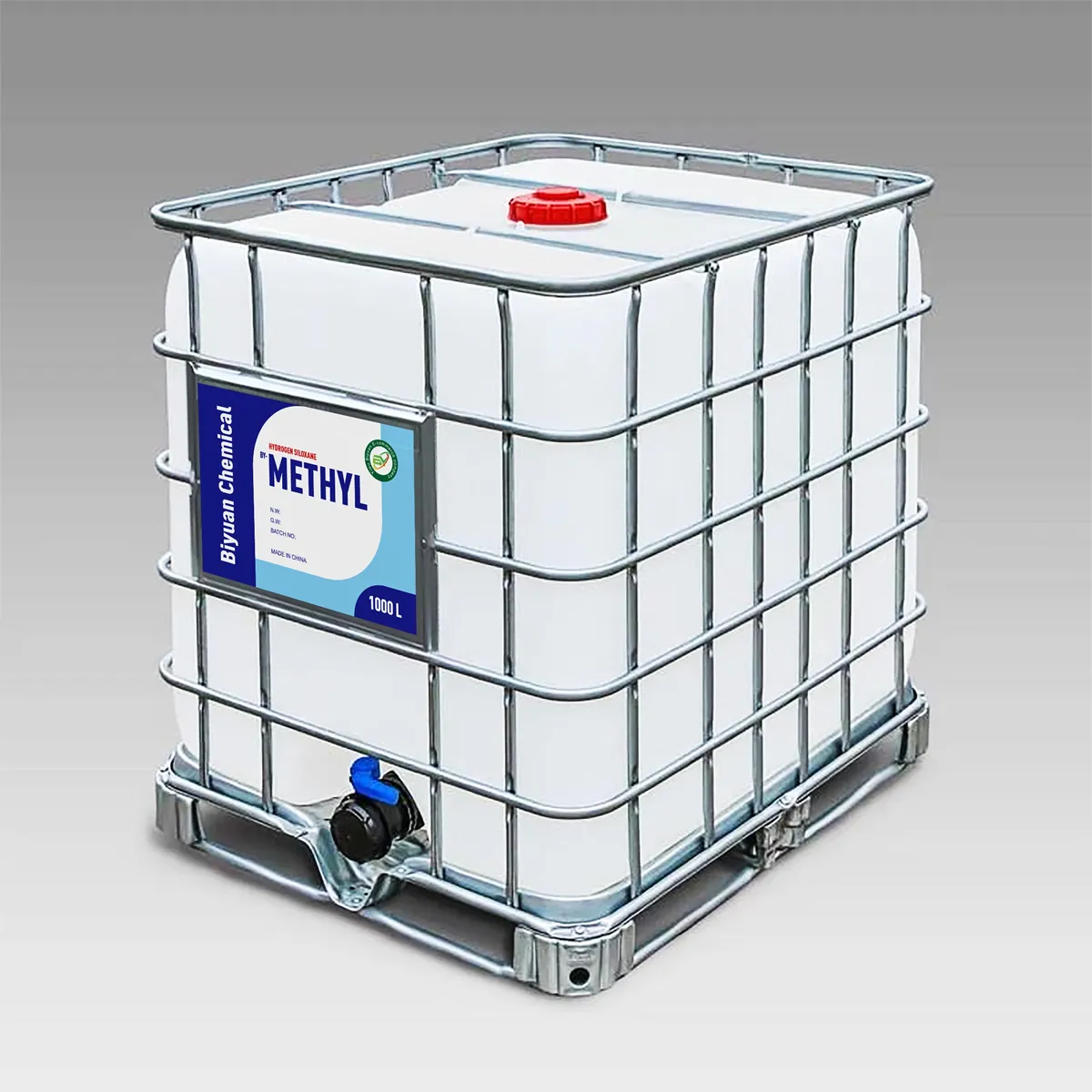
Customized Solutions: Adjustments to viscosity, active content (e.g., 40–60%), and packaging (200L drums, 1-ton containers) .
Technical Support: On-site application guidance and compatibility testing.
Global Logistics: Efficient distribution networks for timely delivery across Asia, Europe, and the Americas .
Biyuan, a leading manufacturer, provides Methyl Hydrogen Silicone Fluid tailored to industrial needs, ensuring seamless integration into waterproofing systems. Their products are equivalent to industry benchmarks like Momentive TSF484 and Dow Corning HF2020, validated by third-party testing .
Conclusion
Achieving optimal waterproofing performance hinges on precise dosage calculations and adherence to application protocols. By leveraging high-quality Methyl Hydrogen Silicone Fluid from certified suppliers and following site-specific adjustments, projects can attain durable, long-lasting water resistance. For detailed technical specifications or bulk order inquiries, consult industry-leading suppliers equipped to meet your project’s unique demands.
Proper Storage Solutions for Methyl Hydrogen Silicone Fluid: A Comprehensive Guide
Methyl Hydrogen Silicone Fluid (MH Silicone Fluid), a versatile polymer with high hydrogen content, is widely used in industries ranging from textiles and construction to cosmetics and electronics. Its unique properties—such as water repellency, thermal stability, and co.
Methyl Hydrogen Silicone Fluid (MH Silicone Fluid), a versatile polymer with applications ranging from industrial lubricants to cosmetic formulations, has seen exponential growth in demand across industries. The production landscape is dominated by specific regions renowned for their advanced manufacturing capabilities, regulatory compliance, and technolog.
What Determines the Curing Time of Methyl Hydrogen Silicone Fluid?
Methyl Hydrogen Silicone Fluid (MH Silicone Fluid) is a versatile material widely used in industries such as textiles, construction, and personal care for its water-repellent and release-agent properties. One of the most critical factors for its application is understanding its curing .
Understanding the Key Differences Between Methyl Hydrogen Silicone Fluid and Dimethyl Silicone Oil
In the realm of silicone-based fluids, Methyl Hydrogen Silicone Fluid (also known as polymethylhydrosiloxane or PMHS) and dimethyl silicone oil (polydimethylsiloxane, PDMS) are two widely used materials with distinct properties and applications. While.
How to Dispose of Methyl Hydrogen Silicone Fluid Safely: A Comprehensive Guide
Methyl Hydrogen Silicone Fluid (MH Silicone Fluid), a critical industrial lubricant and waterproofing agent, requires careful handling and disposal due to its environmental persistence and regulatory constraints. Improper disposal can lead to soil/water contamination, regula.
Preventing Yellowing in MH Silicone Fluid-Treated Materials: A Comprehensive Guide
Methyl Hydrogen Silicone Fluid (MH Silicone Fluid) is a versatile high-performance material renowned for its exceptional waterproofing properties and application versatility across textiles, construction, electronics, and leather processing. However, a common challenge f.
Thermal Stability of Methyl Hydrogen Silicone Fluid: A Comprehensive Analysis
Introduction to Methyl Hydrogen Silicone Fluid
Methyl Hydrogen Silicone Fluid is an organic silicon polymer characterized by its unique molecular structure containing both methyl groups (-CH₃) and active silicon-hydrogen bonds (Si-H). This combination provides an exceptiona.
Key Factors Influencing Methyl Hydrogen Silicone Fluid Adhesion and Performance
Methyl Hydrogen Silicone Fluid represents a specialized category of silicone polymers characterized by reactive silicon-hydrogen (Si-H) bonds within their molecular structure. This unique chemical composition provides both the stability of conventional methyl silicone oils a.
How Methyl Hydrogen Silicone Fluid Revolutionizes Construction Material Performance
In the ever-evolving construction industry, ensuring materials withstand environmental challenges while maintaining structural integrity is paramount. Methyl Hydrogen Silicone Fluid (MH Silicone Fluid) has emerged as a game-changing solution, offering multifaceted benef.
What is Methyl Hydrogen Silicone Fluid (MH Silicone Fluid)?
Methyl Hydrogen Silicone Fluid (MH Silicone Fluid), also known as polymethylhydrosiloxane (PMHS), is a specialized silicone-based polymer widely recognized for its unique hydrophobic properties and versatility in industrial and consumer applications. With the CAS number 63148-57-2, this flui.
The Film-Forming Process of Methyl Hydrogen Silicone Fluid: A Comprehensive Guide
Introduction to Methyl Hydrogen Silicone Fluid
Methyl Hydrogen Silicone Fluid (PMHS) represents a unique category of silicone polymers characterized by active Si-H bonds in their molecular structure. Unlike conventional dimethyl silicone oils, this specialized fluid p.
In the sophisticated chemistry of high-performance silicone materials, the transformation from fluid components to resilient elastomers represents a critical act of molecular architecture. For formulators developing addition-cure systems—from medical-grade gels and flexible adhesives to high-temperature seals and durable composites—the crosslinker operates.
MH Silicone Fluid: The Smart Material Revolutionizing Multiple Industries
In the evolving world of advanced materials, Methyl Hydrogen Silicone Fluid (PMHS) has emerged as a transformative smart material with applications spanning from textiles to aerospace. This specialized silicone variant, characterized by its active Si-H bonds, possesses unique prop.
How Safe Is Methyl Hydrogen Silicone Fluid for Food Applications?
Methyl Hydrogen Silicone Fluid (MH Silicone Fluid), a specialized silicone-based material, has gained attention for its potential use in food-contact applications. But what makes it suitable—or unsuitable—for such uses? Let’s explore its safety, regulatory compliance, and practical appl.
Understanding the Safety Profile of Methyl Hydrogen Silicone Fluid: A Comprehensive Guide
Methyl Hydrogen Silicone Fluid (MH Silicone Fluid), a versatile silicone-based compound, is widely used across industries for its unique properties. However, concerns about its safety persist. This article explores its toxicity, regulatory compliance, and applicat.
Can Methyl Hydrogen Silicone Fluid Withstand Low Temperatures? Unveiling Its Performance in Challenging Climates
Methyl Hydrogen Silicone Fluid (MH Silicone Fluid) is a versatile polymer widely recognized for its adaptability to extreme conditions. One of its most critical attributes is its ability to function effectively in low-temperature environment.
In the world of specialty silicone chemistry, the quality and consistency of your raw materials don’t just influence your product—they define it. For formulators, manufacturers, and R&D teams working across industries from textiles and electronics to automotive and renewable energy, selecting the right reactive silicone intermediate can determine.
Key Applications of Methyl Hydrogen Silicone Fluid Across Industries
Methyl Hydrogen Silicone Fluid (MH Silicone Fluid) has emerged as a versatile and high-performance material, driven by its unique chemical structure and reactive properties. Its ability to form durable hydrophobic coatings, enhance thermal stability, and improve material compatibility.
MH Silicone Fluid in Medical Implants: A Comprehensive Analysis
Methyl Hydrogen Silicone Fluid (MH Silicone Fluid) has emerged as a significant material in various industrial applications, but its potential use in medical implants requires careful examination. This article explores the properties, regulatory considerations, and practical implications of.
In the world of industrial materials, cost-effectiveness is not just about the initial price tag—it’s about performance, durability, and return on investment. Methyl Hydrogen Silicone Fluid (MH Silicone Fluid) has emerged as a standout solution across multiple industries, but how does it truly measure up against alternatives when all factors are cons.
Polymethylhydrosiloxane (PMHS), commonly known as Methyl Hydrogen Silicone Fluid, and dimethyl silicone oil are two important organosilicon compounds with distinct properties and applications. While they share a basic silicone-oxygen backbone, the presence of reactive silicon-hydrogen (Si-H) bonds in PMHS fundamentally differentiates its performance and fu.
The Critical Role of 1.59% Hydrogen Content in PMHS for Enhanced Waterproofing
Introduction
In the specialized world of silicone chemistry, the hydrogen content in polymethylhydrosiloxane (PMHS) serves as a crucial indicator of performance potential, particularly for waterproofing applications. While PMHS is widely recognized for its water-repellent .
Title Interpretation & Executive Summary
The search for reliable PMHS (Polymethylhydrosiloxane) suppliers in North America requires a comprehensive understanding of both the technical specifications of Methyl Hydrogen Silicone Fluid and the stringent quality standards demanded by the automotive industry. This article explores how leading suppliers a.
The convergence of Industry 4.0 and advanced materials like Methyl Hydrogen Silicone Fluid (PMHS) is revolutionizing the waterproofing industry. This transformation is driven by the integration of cyber-physical systems, IoT, and data analytics into manufacturing and application processes, leading to unprecedented levels of efficiency, quality, and sustain.
Ensuring Safety and Durability: The Critical Role of Methyl Hydrogen Silicone Fluid in Modern Food-Grade Packaging
In an era where consumer trust in food safety is paramount, the choice of packaging materials directly impacts brand reputation and regulatory compliance. Among the specialized ingredients driving innovation in food-grade packaging, Methyl.
The Middle East is undergoing an unprecedented construction renaissance, with mega-projects transforming the region’s landscape and creating massive demand for high-performance building materials. At the heart of this infrastructure boom is Methyl Hydrogen Silicone Fluid (PMHS), a versatile silicone-based compound that plays a critical role in modern.
Executive Summary
The global methyl hydrogen silicone fluid market is experiencing significant transformation, with China emerging as the dominant force in production and supply chain dynamics. This versatile material, known for its exceptional thermal stability, water repellency, and lubrication properties, has become indispensable across diverse indus.
Polymethylhydrosiloxane (PMHS), commonly known as Methyl Hydrogen Silicone Fluid, plays a critical role in enhancing the performance and stability of modern cosmetic and pharmaceutical products. This specialized silicone derivative offers unique chemical properties that make it particularly valuable in formulations where pH stability is essential for maint.
Flash Point Analysis: Critical Safety Protocols for Handling Methyl Hydrogen Silicone Fluid
Methyl Hydrogen Silicone Fluid (MHSF) represents a specialized category of silicone polymers characterized by reactive silicon-hydrogen (Si-H) bonds within their molecular structure. These fluids serve as crucial components across diverse industrial sectors, in.
Polymethylhydrosiloxane: Advancing Solar Technology Through Innovative Materials
Introduction: The Unsung Hero of Solar Panel Efficiency
In the rapidly evolving solar energy sector, material innovations play a critical role in enhancing panel performance and durability. Among these advancements, polymethylhydrosiloxane (PMHS), also known as methyl hy.
Methyl Hydrogen Silicone Fluid in Medical Device Coatings: Ensuring Safety and Efficacy
Introduction
The use of Methyl Hydrogen Silicone Fluid (PMHS) in medical device coatings represents a significant advancement in healthcare technology, combining unique material properties with critical safety considerations. This specialized silicone fluid has ga.
Thermal Stability of Methyl Hydrogen Silicone Fluid: Effective Mitigation Strategies
Introduction to Thermal Degradation
Methyl Hydrogen Silicone Fluid (PMHS) is a versatile silicone-based material valued for its unique molecular structure containing active Si-H bonds. These bonds, while enabling various beneficial chemical reactions, also present .
Understanding PMHS Viscosity: Selecting the Optimal Grade for Industrial Applications
Introduction
Polymethylhydrosiloxane (PMHS), commonly known as Methyl Hydrogen Silicone Fluid, is a versatile organosilicon compound with unique properties that make it invaluable across numerous industries. The viscosity of PMHS plays a crucial role in determining .
Methyl Hydrogen Silicone Fluid: The Ultimate Plastic Processing Aid for Enhanced Performance
In the dynamic world of plastic manufacturing, achieving optimal product quality, durability, and process efficiency is paramount. Among the array of additives available, methyl hydrogen silicone fluid has emerged as a game-changing solution. This versatile c.
Enhancing Automotive Paint Durability: The Role of PMHS Technology
In the automotive industry, the longevity and aesthetic appeal of paint finishes are critical factors that impact both vehicle value and consumer satisfaction. Achieving durable, high-quality automotive coatings requires advanced chemical solutions that promote superior adhesion between .
In the rapidly evolving global chemical industry, Methyl Hydrogen Silicone Fluid (PMHS) stands as a critical material with diverse applications across textiles, automotive, construction, and personal care sectors. As we approach 2026, the market for PMHS is projected to reach USD 0.36 billion, growing at a CAGR of 9% between 2025 and 2034. This growth traj.
The Pivotal Role of Platinum Catalysts in PMHS Cross-Linking: Technology, Applications, and Market Trends
Introduction to Platinum-Catalyzed PMHS Cross-Linking
The cross-linking of poly(methylhydrosiloxane), commonly known as methyl hydrogen silicone fluid (MH fluid), represents a sophisticated chemical process where platinum catalysts play an indi.
Methyl Hydrogen Silicone Fluid: Certifications and Compliance for Sustainable Construction
Introduction to Green Building Materials and PMHS
The global construction industry is undergoing a fundamental transformation toward sustainability, driven by increasingly stringent environmental regulations and growing consumer demand for eco-friendly building.
Introduction to the PMHS Landscape in China
The Chinese poly(methylhydrosiloxane) (PMHS) market has evolved into a global powerhouse, driven by robust manufacturing capabilities and growing demand across diverse industries. Known commercially as Methyl Hydrogen Silicone Fluid, this specialized silicone intermediate has become indispensable in sectors ra.
The 2025 Sustainability Awards represent a pivotal moment for the chemical industry, particularly for manufacturers of Methyl Hydrogen Silicone Fluid (PMHS). As global demand for sustainable solutions intensifies, these awards recognize companies that are pioneering eco-friendly production methods, reducing environmental impact, and advancing green technol.
Methyl hydrogen siloxane serves as a multifunctional additive that significantly improves processing characteristics and final properties in silicone rubber applications. This specialized silicone fluid features reactive Si-H groups that enable efficient cross-linking through hydrosilylation reactions with vinyl-functionalized silicone rubbers.
.
Medical-grade Methyl hydrogen siloxane serves as a versatile functional material in healthcare applications, combining high purity with reactive Si-H groups for enhanced performance. This specialized silicone fluid enables precise cross-linking in implantable devices, provides controlled drug release matrices, and creates anti-fouling surface coa.
Methyl hydrogen siloxane serves as a versatile functional additive in personal care products, leveraging its unique Si-H reactivity and silicone properties to deliver enhanced performance across various applications. This specialized material acts as an effective cross-linker in hair care products, creating durable yet flexible films that provide.
Methyl hydrogen siloxane serves as a innovative processing aid that enhances both the efficiency of leather manufacturing and the quality of finished products. This reactive silicone fluid improves leather softness and flexibility through effective fiber lubrication and molecular-level modification. Its unique chemical properties enable superior .

Contact Us
We're here to help with any questions or inquiries you may have
Contact Information
Address
No. 116, Jiangdong Street, Yiwu City, Jinhua City, Zhejiang Province,China