Everything you need to know about our products and company
How Methyl Hydrogen Silicone Fluid Achieves Optimal Performance: Curing Insights
Methyl Hydrogen Silicone Fluid (MH Silicone Fluid) is a versatile polymer widely recognized for its water-repellent, adhesive, and crosslinking capabilities. A common question among industrial users is whether this material requires curing to unlock its full potential. The answer lies in its unique chemical structure and application-specific requirements.
MH Silicone Fluid contains reactive Si-H bonds, which enable crosslinking reactions with functional groups like hydroxyls or double bonds. This process, often catalyzed by platinum or metal salts, transforms the fluid into a durable, elastic material. For instance:
Heat-Activated Curing: At temperatures above 150°C, MH Silicone Fluid undergoes thermal crosslinking, forming a robust network ideal for high-performance applications like aerospace composites .
Catalyst-Driven Curing: Platinum-based catalysts accelerate room-temperature curing, enabling faster production cycles in industries such as textiles and construction .
Key Applications Requiring Curing
Textile Waterproofing:MH Silicone Fluid is applied to fabrics as a waterproofing agent. Curing ensures long-term hydrophobicity while maintaining breathability. For example, post-curing at 180°C enhances durability for outdoor apparel .
Building Materials:In gypsum boards and cement products, curing MH Silicone Fluid creates a moisture-resistant barrier. Optimal curing times (4–6 hours) depend on ambient humidity and formulation .
Cosmetics & Personal Care:As a silica precursor, MH Silicone Fluid requires controlled curing to stabilize formulations. This ensures smooth texture and extended wear in foundations and powders .
Why Curing Matters for Performance
Enhanced Stability: Curing eliminates volatile components, improving thermal and chemical resistance.
Tailored Properties: Adjusting curing parameters (temperature, catalyst concentration) allows customization for specific needs, such as flexibility in rubber compounds or rigidity in ceramics .
Longevity: Properly cured MH Silicone Fluid resists yellowing and degradation, critical for architectural sealants and high-end finishes .
Biyuan: Your Trusted Partner in MH Silicone Fluid Solutions
As a leading Methyl Hydrogen Silicone Fluid manufacturer, Biyuan specializes in delivering high-purity, customizable formulations. Our products, compliant with global standards (ASTM, ISO), cater to industries ranging from construction to cosmetics.
Why Choose Biyuan?
Advanced R&D: Innovations in Si-H bond engineering ensure superior crosslinking efficiency.
Scalable Production: Bulk orders with consistent quality, supported by ISO-certified facilities .
Technical Expertise: Dedicated support for formulation optimization, curing process design, and troubleshooting.
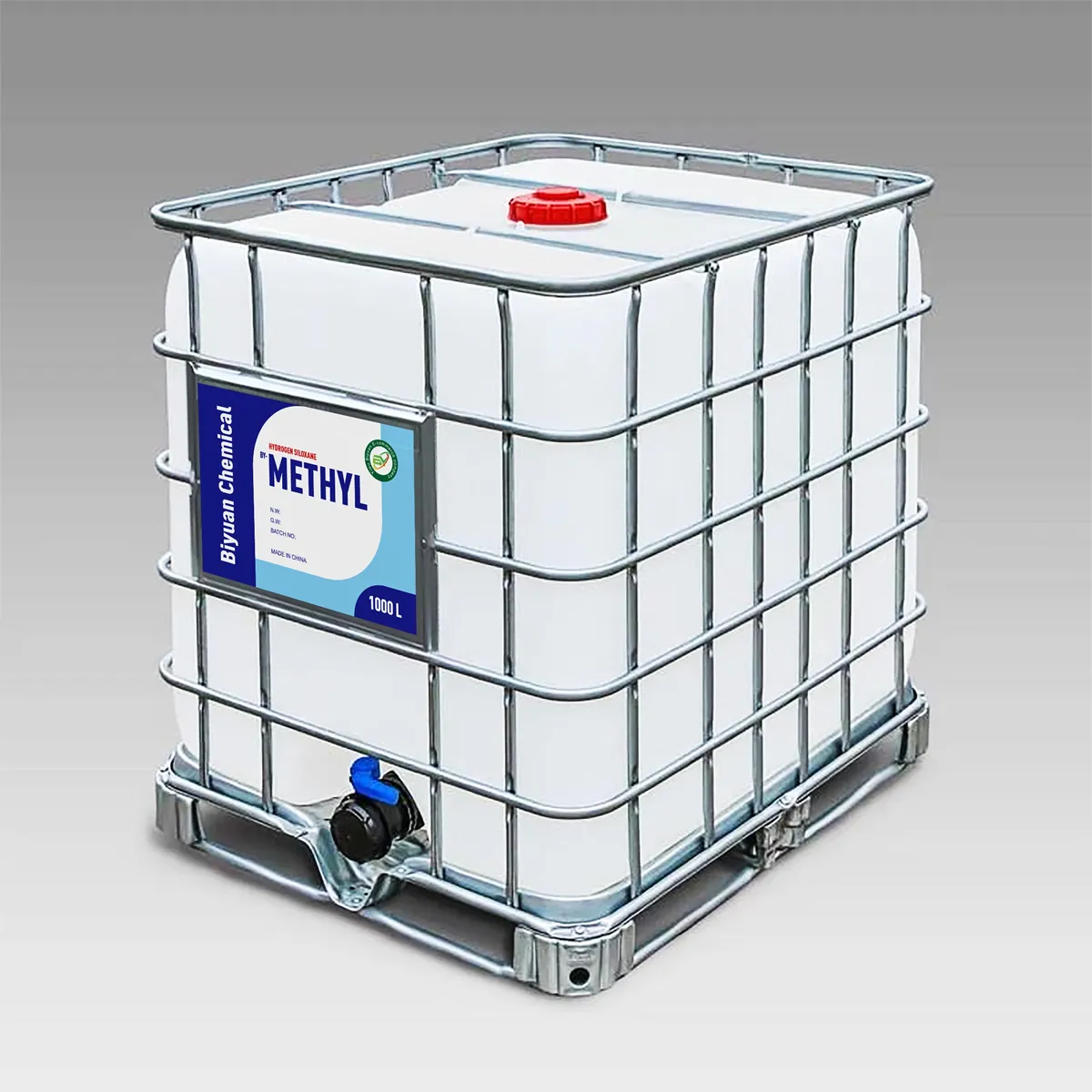
For wholesalers and suppliers seeking reliable MH Silicone Fluid, Biyuan offers flexible packaging (20kg drums to 200kg IBCs) and competitive pricing. Partner with us to elevate product performance and meet stringent industry demands.
Methyl Hydrogen Silicone Fluidcontinues to revolutionize material science, and Biyuan remains at the forefront of delivering solutions that balance functionality, safety, and sustainability.
Can MH Silicone Fluid Be Mixed with Other Silicone Fluids?
Methyl Hydrogen Silicone Fluid (MH Silicone Fluid), a specialized silicone product with reactive Si-H bonds, is widely used in industries like coatings, textiles, and mold-making. A common question arises: Can it be safely mixed with other silicone fluids? The answer depends on chemical com.
Innovations Shaping MH Silicone Fluid R&D
The global Methyl Hydrogen Silicone Fluid market is undergoing a significant transformation, driven by advanced material demands across textiles, electronics, automotive, and construction industries. With the market projected to reach an estimated $0.6 billion by 2031, registering a CAGR of 8.5%, innovation .
How Hydrogen Content Affects Functionality in Industrial Materials and Fluids
The Critical Role of Hydrogen in Material Performance
Hydrogen content plays a crucial role in determining the functionality and reliability of industrial materials and specialty chemicals. While hydrogen is the smallest element, its presence and concentration can dramatica.
Mitigating Risks in Industrial Applications: The Hidden Costs of Over-Application
In industrial and commercial sectors, the pursuit of efficiency often leads to over-reliance on chemical solutions—a practice that can backfire dramatically. Methyl Hydrogen Silicone Fluid, a versatile silicone-based compound, exemplifies this dilemma. While it offers exc.
Selecting the right Methyl Hydrogen Silicone Fluid (MHF) supplier is critical for industries ranging from textiles and construction to cosmetics and electronics. This versatile fluid, renowned for its water-repellent and crosslinking properties, requires careful evaluation of supplier capabilities to ensure quality, consistency, and long-term value. Bel.
Unlocking Value: Bulk Discounts and Strategic Advantages of Methyl Hydrogen Silicone Fluid
In the competitive landscape of industrial chemicals, cost efficiency without compromising quality is a paramount concern for procurement managers and business owners. Methyl Hydrogen Silicone Fluid (PMHS) stands as a critical material in numerous manufacturing p.
In the rapidly evolving landscape of high-performance materials, methyl hydrogen silicone fluid has carved out a unique and indispensable role. This remarkable silicone derivative, characterized by its active Si-H bonds, is powering advancements across diverse industries—from textiles and electronics to automotive and aerospace. But what sets it apart from.
Essential PPE for Safe Handling of Methyl Hydrogen Silicone Fluid (MHFS)
Methyl Hydrogen Silicone Fluid (MHFS), a versatile silicone-based chemical with reactive Si-H bonds, is widely used in industries like textiles, electronics, and construction for waterproofing, lubrication, and crosslinking applications. However, its chemical properties—such as t.
In the rapidly evolving electronics manufacturing industry, the selection of advanced materials directly influences product performance, reliability, and competitiveness. As electronic devices become increasingly miniaturized and multifunctional, the demand for high-performance insulating, sealing, and protective materials has grown significantly. Among th.
Can Methyl Hydrogen Silicone Fluid Withstand Low Temperatures? Unveiling Its Performance in Challenging Climates
Methyl Hydrogen Silicone Fluid (MH Silicone Fluid) is a versatile polymer widely recognized for its adaptability to extreme conditions. One of its most critical attributes is its ability to function effectively in low-temperature environment.
What Are the Benefits of Methyl Hydrogen Silicone Fluid for Metal Surfaces?
Methyl Hydrogen Silicone Fluid (MH Silicone Fluid) has emerged as a game-changing solution in industrial applications, particularly for metal surface treatments. Its unique chemical properties and versatility make it indispensable across sectors like construction, automotive, .
Emerging Applications and Innovations in Methyl Hydrogen Silicone Fluid: A Market Shift Towards High-Performance Solutions
The global chemical industry is witnessing a significant transformation, driven by technological advancements and evolving regulatory landscapes. Within this dynamic environment, Methyl Hydrogen Silicone Fluid(PMHS) is experiencing .
In the world of construction materials, concrete durability remains a paramount concern for engineers, architects, and builders. While concrete is renowned for its strength, its porous nature makes it vulnerable to water infiltration, chemical attacks, and environmental degradation. This is where Methyl Hydrogen Silicone Fluid emerges as a transforma.
MH Silicone Fluid: The Smart Material Revolutionizing Multiple Industries
In the evolving world of advanced materials, Methyl Hydrogen Silicone Fluid (PMHS) has emerged as a transformative smart material with applications spanning from textiles to aerospace. This specialized silicone variant, characterized by its active Si-H bonds, possesses unique prop.
Methyl Hydrogen Silicone Fluid: Driving Innovation and Durability in the Marine Industry
The marine industry operates in one of the most demanding environments on Earth, where constant exposure to saltwater, humidity, and extreme weather relentlessly attacks vessels, structures, and equipment. Protecting these assets is a perpetual challenge. Methyl H.
Methyl Hydrogen Silicone Fluid vs. Fluorosilicone Fluids: Key Advantages for Industrial Applications
In the world of specialized silicone fluids, manufacturers often face the critical choice between Methyl Hydrogen Silicone Fluid and fluorosilicone fluids. While both offer unique properties, understanding their comparative advantages is essential for .
Understanding Methyl Hydrogen Silicone Fluid: Density and Key Properties
Methyl Hydrogen Silicone Fluid (MH Silicone Fluid) is a specialized silicone-based material widely recognized for its versatility in industrial and commercial applications. At the heart of its functionality lies its unique physical and chemical properties, with density at 25°C bei.
How Temperature Influences Methyl Hydrogen Silicone Fluid Performance
Methyl Hydrogen Silicone Fluid (MH Silicone Fluid) is a specialized synthetic polymer renowned for its versatility in industrial and commercial applications. Its unique molecular structure—combining methyl groups (-CH₃) and reactive silicon-hydrogen (Si-H) bonds—enables exceptional t.
The Film-Forming Process of Methyl Hydrogen Silicone Fluid: A Comprehensive Guide
Introduction to Methyl Hydrogen Silicone Fluid
Methyl Hydrogen Silicone Fluid (PMHS) represents a unique category of silicone polymers characterized by active Si-H bonds in their molecular structure. Unlike conventional dimethyl silicone oils, this specialized fluid p.
Ensuring Quality: How to Verify the Purity of Methyl Hydrogen Silicone Fluid
In the industrial and chemical sectors, the purity of Methyl Hydrogen Silicone Fluid is paramount for performance and safety. This versatile organosilicon polymer, known for its reactive Si-H bonds and hydrophobic properties, is critical in textiles, cosmetics, electronics, .
Asian Methyl Hydrogen Silicone Fluid Exports to Europe: Market Dynamics and Future Outlook
Introduction: The Growing Transcontinental Trade
The export flow of Methyl Hydrogen Silicone Fluid from Asia to Europe represents a critical segment of the global specialty chemicals trade, characterized by evolving supply chains, stringent regulatory framework.
Methyl Hydrogen Silicone Fluid in Medical Device Coatings: Ensuring Safety and Efficacy
Introduction
The use of Methyl Hydrogen Silicone Fluid (PMHS) in medical device coatings represents a significant advancement in healthcare technology, combining unique material properties with critical safety considerations. This specialized silicone fluid has ga.
The 2025 Sustainability Awards represent a pivotal moment for the chemical industry, particularly for manufacturers of Methyl Hydrogen Silicone Fluid (PMHS). As global demand for sustainable solutions intensifies, these awards recognize companies that are pioneering eco-friendly production methods, reducing environmental impact, and advancing green technol.
Sustainable Innovation: The Growing Market for Biodegradable PMHS Formulations
In recent years, the global push for sustainability has catalyzed significant advancements in polymer science, particularly in the development of biodegradable polymer materials. Among these, Methyl Hydrogen Silicone Fluid (PMHS) has emerged as a key player, with innovative f.
Enhancing Automotive Paint Durability: The Role of PMHS Technology
In the automotive industry, the longevity and aesthetic appeal of paint finishes are critical factors that impact both vehicle value and consumer satisfaction. Achieving durable, high-quality automotive coatings requires advanced chemical solutions that promote superior adhesion between .
Methyl Hydrogen Silicone Fluid: 2025 Market Analysis and Price Forecast
Executive Summary
The global methyl hydrogen silicone fluid market is poised for significant growth in 2025, driven by expanding demand from key industries including textiles, construction, electronics, and personal care. With technological advancements and sustainability initiat.
How the Pandemic Reshaped Medical Packaging: The Rise of Methyl Hydrogen Silicone Fluid
The COVID-19 pandemic served as a pivotal moment for the global healthcare industry, triggering unprecedented demand for advanced medical packaging solutions. At the heart of this transformation lies Methyl Hydrogen Silicone Fluid (PMHS), a specialized silicone polym.
The Indian textile industry is undergoing a significant transformation as manufacturers increasingly adopt Poly Methyl Hydrogen Silicone (PMHS) technology to produce high-performance waterproof fabrics. This shift represents a strategic response to growing market demand for functional textiles that combine water resistance with breathability, durability, a.
The convergence of Industry 4.0 and advanced materials like Methyl Hydrogen Silicone Fluid (PMHS) is revolutionizing the waterproofing industry. This transformation is driven by the integration of cyber-physical systems, IoT, and data analytics into manufacturing and application processes, leading to unprecedented levels of efficiency, quality, and sustain.
Methyl Hydrogen Silicone Fluid vs. Fluorosilicone: Which Delivers Unmatched Waterproofing Performance?
Waterproofing is a critical requirement across industries—from construction to textiles and electronics. Two materials often compared for their hydrophobic properties are methyl hydrogen silicone fluid and fluorosilicone. While both offer water-re.
Polymethylhydrosiloxane: Advancing Solar Technology Through Innovative Materials
Introduction: The Unsung Hero of Solar Panel Efficiency
In the rapidly evolving solar energy sector, material innovations play a critical role in enhancing panel performance and durability. Among these advancements, polymethylhydrosiloxane (PMHS), also known as methyl hy.
The Pivotal Role of Platinum Catalysts in PMHS Cross-Linking: Technology, Applications, and Market Trends
Introduction to Platinum-Catalyzed PMHS Cross-Linking
The cross-linking of poly(methylhydrosiloxane), commonly known as methyl hydrogen silicone fluid (MH fluid), represents a sophisticated chemical process where platinum catalysts play an indi.
Title Interpretation & Executive Summary
The search for reliable PMHS (Polymethylhydrosiloxane) suppliers in North America requires a comprehensive understanding of both the technical specifications of Methyl Hydrogen Silicone Fluid and the stringent quality standards demanded by the automotive industry. This article explores how leading suppliers a.
The global chemical industry is undergoing a transformative shift toward sustainable manufacturing, and suppliers of Polymethylhydrosiloxane (PMHS), commonly known as Methyl Hydrogen Silicone Fluid, are at the forefront of this change. Through strategic localization of production and technological innovation, these companies are significantly reducing thei.
How a European Textile Brand Mastered the Chinese Market Using Methyl Hydrogen Silicone Fluid
Introduction: The Technical Textile Breakthrough
In the highly competitive global textile industry, European brands constantly seek innovative approaches to penetrate lucrative markets like China. One notable success story involves a forward-thinking Europea.
PMHS: Revolutionizing Aerospace with Lightweight Waterproofing Technology
Introduction: The Critical Role of Advanced Materials in Aerospace
The aerospace industry faces constant pressure to enhance performance, reduce weight, and improve sustainability. At the forefront of materials innovation is Poly(methyl hydrogen)siloxane (PMHS), commonly known .
Unlocking Precision Manufacturing: The Role of Methyl Hydrogen Silicone Fluid in 3D Printing and Electronics
In advanced manufacturing, material innovation often drives breakthroughs in product performance and process efficiency. Among the unsung heroes of modern industry, methyl hydrogen silicone fluid (also referred to as methylhydrogen polysiloxane.
Flash Point Analysis: Critical Safety Protocols for Handling Methyl Hydrogen Silicone Fluid
Methyl Hydrogen Silicone Fluid (MHSF) represents a specialized category of silicone polymers characterized by reactive silicon-hydrogen (Si-H) bonds within their molecular structure. These fluids serve as crucial components across diverse industrial sectors, in.
Exploring the Role of Methyl Hydrogen Silicone Fluid in Sustainable Catalysis
In the quest for greener industrial processes, catalyst innovation has taken center stage. Catalysts drive efficiency in chemical reactions, but their performance often hinges on the carrier material—a component that anchors active sites while influencing stability, reactivity.
Optimizing Industrial Cooling Efficiency: How Methyl Hydrogen Silicone Fluid Drives Energy Savings
In today’s energy-conscious industrial landscape, cooling systems account for a staggering 30-50% of total energy consumption in facilities like manufacturing plants, data centers, and chemical refineries. For operators, rising utility costs and regulator.
Methyl hydrogen siloxane serves as a multifunctional additive that significantly improves processing characteristics and final properties in silicone rubber applications. This specialized silicone fluid features reactive Si-H groups that enable efficient cross-linking through hydrosilylation reactions with vinyl-functionalized silicone rubbers.
.
Medical-grade Methyl hydrogen siloxane serves as a versatile functional material in healthcare applications, combining high purity with reactive Si-H groups for enhanced performance. This specialized silicone fluid enables precise cross-linking in implantable devices, provides controlled drug release matrices, and creates anti-fouling surface coa.
Methyl hydrogen siloxane serves as a versatile functional additive in personal care products, leveraging its unique Si-H reactivity and silicone properties to deliver enhanced performance across various applications. This specialized material acts as an effective cross-linker in hair care products, creating durable yet flexible films that provide.
Methyl hydrogen siloxane serves as a innovative processing aid that enhances both the efficiency of leather manufacturing and the quality of finished products. This reactive silicone fluid improves leather softness and flexibility through effective fiber lubrication and molecular-level modification. Its unique chemical properties enable superior .
Contact Us
We're here to help with any questions or inquiries you may have
Contact Information
Address
No. 116, Jiangdong Street, Yiwu City, Jinhua City, Zhejiang Province,China