Packaging Solutions for Methyl Hydrogen Silicone Fluid: A Comprehensive Guide - Methyl Hydrogen Silicone Fluid Factory
Methyl Hydrogen Silicone Fluid Factory
Methyl Hydrogen Silicone Fluid Factory
Methyl Hydrogen Silicone Fluid
Information Center
Everything you need to know about our products and company
Methyl Hydrogen Silicone Fluid, a versatile compound widely used in industries such as textiles, construction, and cosmetics, requires specialized packaging to ensure safety, stability, and compliance. Understanding the available packaging options and their applications is critical for manufacturers, distributors, and end-users. Below, we explore tailored packaging strategies, material considerations, and industry trends to optimize your supply chain and meet diverse market demands.
1. Standard Packaging Formats
Methyl Hydrogen Silicone Fluid is typically supplied in bulk containers designed for industrial efficiency:
25kg Plastic Pails: Ideal for small-to-medium batches, these lightweight, corrosion-resistant containers are easy to handle and transport. They are commonly used for laboratory testing or niche applications requiring precise quantities .
200kg Steel Drums: The most popular choice for bulk shipments, steel drums provide robust protection against leaks and environmental factors. They are compatible with automated filling systems, streamlining logistics for high-volume orders .
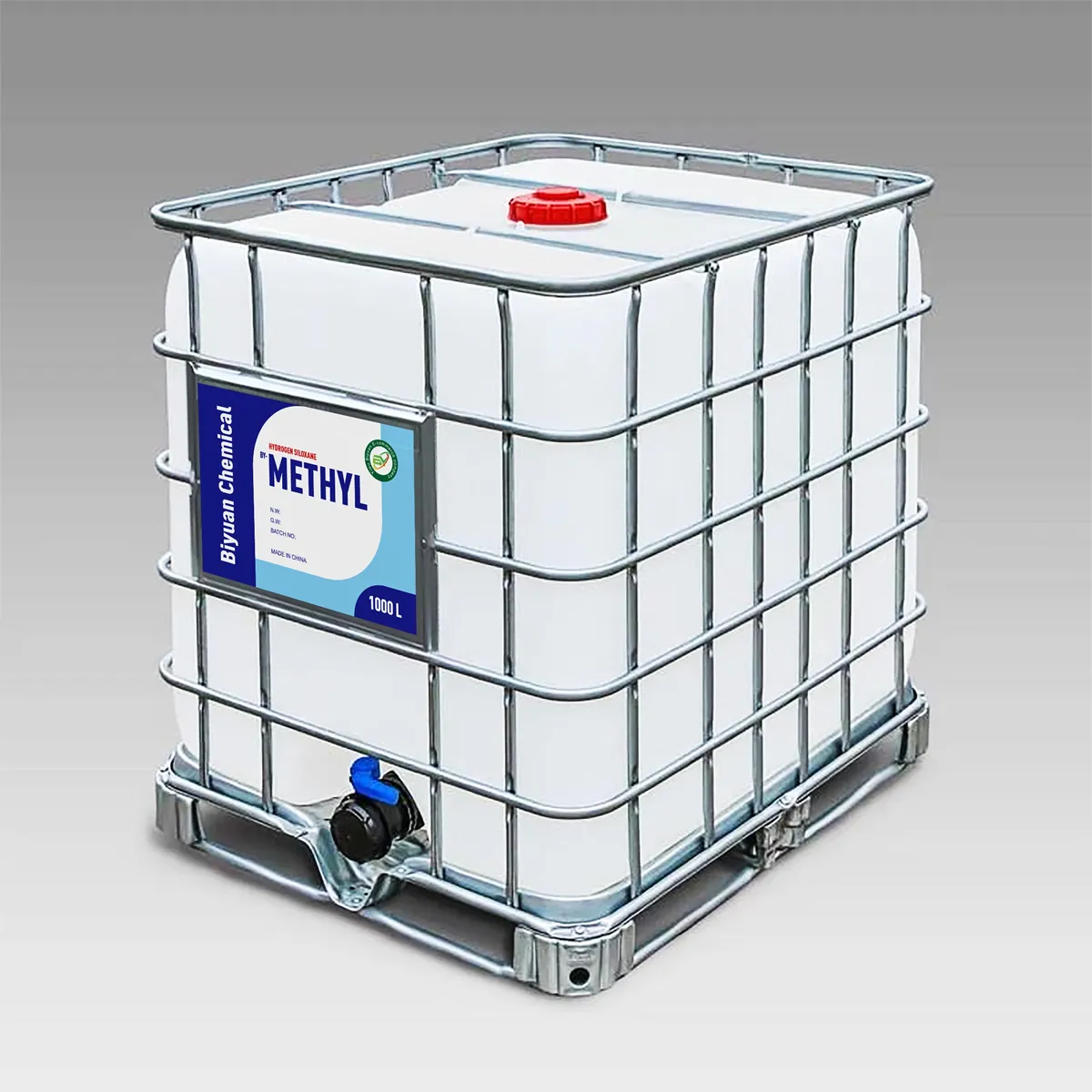
1000kg IBC Totes: For large-scale industrial use, Intermediate Bulk Containers (IBCs) offer cost-effective storage and transportation. Their modular design allows easy stacking and integration with forklifts, minimizing downtime .
These standardized options ensure compliance with global shipping regulations while balancing cost and durability.
2. Material Selection and Safety
Packaging materials must align with the chemical properties of Methyl Hydrogen Silicone Fluid:
High-Density Polyethylene (HDPE): Preferred for its chemical resistance and durability, HDPE is ideal for liquid silicone fluids. It resists degradation from hydrocarbons and maintains integrity under fluctuating temperatures .
Stainless Steel Drums: For ultra-sensitive applications, stainless steel containers prevent contamination and ensure long-term stability. They are often lined with food-grade coatings to avoid interactions with reactive compounds .
Eco-Friendly Alternatives: With growing demand for sustainability, biodegradable plastics and recyclable composites are emerging as viable options. These materials reduce environmental impact without compromising performance .
Secondary Packaging: Adding protective layers, such as moisture-resistant shrink wrap or pallet sleeves, safeguards against humidity and physical damage during transit. This is critical for regions with high humidity or rough handling conditions .
Labeling and Traceability: Clear labeling with batch numbers, expiry dates, and hazard symbols ensures compliance with safety standards. QR code integration enables real-time tracking, enhancing transparency across the supply chain .
Flexible Packaging: For niche applications, resealable pouches or modified atmosphere packaging (MAP) extend shelf life by controlling oxygen and moisture levels .
4. Certifications and Compliance
Reputable suppliers adhere to international standards to guarantee quality:
ISO 9001 Certification: Ensures rigorous quality control in manufacturing and packaging processes.
REACH Compliance: Critical for EU markets, this certification verifies that packaging materials meet stringent chemical safety requirements .
Food-Grade Approval: Essential for applications in cosmetics or food-contact industries, this certification confirms the absence of contaminants.
5. Supply Chain and Logistics Optimization
Efficient packaging supports seamless logistics:
Bulk Shipping: IBC totes and steel drums maximize cargo space, reducing freight costs. Partnering with logistics providers specializing in chemical transport minimizes risks .
Inventory Management: Just-in-time delivery models and regional warehouses ensure uninterrupted supply, critical for industries with volatile demand .
Why Partner with BYYU?
As a leading supplier of Methyl Hydrogen Silicone Fluid packaging solutions, Biyuan combines technical expertise with industry-leading innovation:
Customization Expertise: From HDPE pails to biodegradable options, we design packaging that aligns with your product’s chemical and logistical needs.
Global Reach: With a robust network of warehouses and certified carriers, we ensure timely delivery across continents.
For bulk orders or specialized requirements, Biyuan offers competitive pricing and dedicated customer support. Whether you’re a manufacturer seeking cost-effective solutions or a distributor prioritizing safety, our packaging services are engineered to elevate your operations.
Is MH Silicone Fluid Eco-Friendly? A Comprehensive Analysis of Methyl Hydrogen Silicone Fluid
In the pursuit of sustainable alternatives, Methyl Hydrogen Silicone Fluid (MH Silicone Fluid) has emerged as a topic of interest. But is it truly eco-friendly? This article dives into its environmental impact, applications, and innovations, while addressin.
Key Factors Influencing Methyl Hydrogen Silicone Fluid Adhesion and Performance
Methyl Hydrogen Silicone Fluid represents a specialized category of silicone polymers characterized by reactive silicon-hydrogen (Si-H) bonds within their molecular structure. This unique chemical composition provides both the stability of conventional methyl silicone oils a.
MH Silicone Fluid: The Unsung Hero in Tire Manufacturing Efficiency
In the highly competitive tire manufacturing industry, efficiency, precision, and quality are paramount. Methyl Hydrogen Silicone Fluid (PMHS), a versatile silicone polymer, has emerged as a critical specialty chemical in this sector, particularly as a high-performance release agent. I.
Understanding Optimal Dosage for Methyl Hydrogen Silicone Fluid in Waterproofing Applications
Waterproofing is a critical aspect of construction and material engineering, and Methyl Hydrogen Silicone Fluid has emerged as a game-changing solution for enhancing water repellency and durability. Determining the correct dosage for specific applications en.
In the precise engineering of silicone materials, achieving targeted mechanical, thermal, and environmental performance relies fundamentally on the strategic architecture of crosslinked networks. For formulators developing addition-cure silicone rubbers, adhesives, coatings, and specialized encapsulation systems, the selection of a crosslinking agent trans.
Unlocking Value: Bulk Discounts and Strategic Advantages of Methyl Hydrogen Silicone Fluid
In the competitive landscape of industrial chemicals, cost efficiency without compromising quality is a paramount concern for procurement managers and business owners. Methyl Hydrogen Silicone Fluid (PMHS) stands as a critical material in numerous manufacturing p.
AI-Driven Optimizations Revolutionize Methyl Hydrogen Silicone Fluid Applications
The industrial landscape for Methyl Hydrogen Silicone Fluidis undergoing a profound transformation as artificial intelligence emerges as a critical enabler of innovation and efficiency. This versatile organosilicon polymer, renowned for its reactive Si-H bonds and exceptio.
Methyl Hydrogen Silicone Fluid (MH Silicone Fluid), a specialized silicone-based compound, is widely used across industries for its water-repellent, lubricating, and crosslinking properties. While it is generally regarded as safe, concerns about allergenic risks persist. This article explores the potential allergen risks associated with MH Silicone Fluid, .
Preventing Yellowing in MH Silicone Fluid-Treated Materials: A Comprehensive Guide
Methyl Hydrogen Silicone Fluid (MH Silicone Fluid) is a versatile high-performance material renowned for its exceptional waterproofing properties and application versatility across textiles, construction, electronics, and leather processing. However, a common challenge f.
Methyl Hydrogen Silicone Fluid: Performance Advantages Over Organosilicon Alternatives
In the evolving landscape of industrial silicone applications, the selection between methyl hydrogen silicone fluid and other organosilicon alternatives has become a critical decision for manufacturers and formulators. This comprehensive analysis explores the techni.
In the world of specialty chemicals and advanced materials, the quality of your raw materials directly determines the performance, reliability, and competitiveness of your final products. For formulators, manufacturers, and R&D teams seeking to develop high-performance solutions across diverse industries—from textiles and electronics to automotive and .
Understanding the Key Differences Between Methyl Hydrogen Silicone Fluid and Dimethyl Silicone Oil
In the realm of silicone-based fluids, Methyl Hydrogen Silicone Fluid (also known as polymethylhydrosiloxane or PMHS) and dimethyl silicone oil (polydimethylsiloxane, PDMS) are two widely used materials with distinct properties and applications. While.
Understanding FDA Compliance for Methyl Hydrogen Silicone Fluid: Key Insights and Applications
Methyl Hydrogen Silicone Fluid (MH Silicone Fluid) is a versatile synthetic polymer widely used in industries ranging from pharmaceuticals to construction. One of the most critical considerations for manufacturers and suppliers is whether this material aligns.
Mitigating Risks in Industrial Applications: The Hidden Costs of Over-Application
In industrial and commercial sectors, the pursuit of efficiency often leads to over-reliance on chemical solutions—a practice that can backfire dramatically. Methyl Hydrogen Silicone Fluid, a versatile silicone-based compound, exemplifies this dilemma. While it offers exc.
What Are the Benefits of Methyl Hydrogen Silicone Fluid for Metal Surfaces?
Methyl Hydrogen Silicone Fluid (MH Silicone Fluid) has emerged as a game-changing solution in industrial applications, particularly for metal surface treatments. Its unique chemical properties and versatility make it indispensable across sectors like construction, automotive, .
In the rapidly evolving electronics manufacturing industry, the selection of advanced materials directly influences product performance, reliability, and competitiveness. As electronic devices become increasingly miniaturized and multifunctional, the demand for high-performance insulating, sealing, and protective materials has grown significantly. Among th.
Does MH Silicone Fluid Resist UV Degradation? A Comprehensive Analysis
In the world of high-performance materials, Methyl Hydrogen Silicone Fluid (MHSF) has carved out a critical niche due to its exceptional versatility. A question frequently posed by engineers and product developers is: Can MH Silicone Fluid resist UV degradation? The answer is a d.
Understanding the Limitations of Methyl Hydrogen Silicone Fluid in Industrial Applications
Methyl Hydrogen Silicone Fluid (MH Silicone Fluid) has established itself as a critical material across diverse industries, from textiles and electronics to construction and cosmetics. As a specialized silicone polymer containing active silicon-hydrogen (Si-H) bon.
How Methyl Hydrogen Silicone Fluid Revolutionizes Construction Material Performance
In the ever-evolving construction industry, ensuring materials withstand environmental challenges while maintaining structural integrity is paramount. Methyl Hydrogen Silicone Fluid (MH Silicone Fluid) has emerged as a game-changing solution, offering multifaceted benef.
Essential PPE for Safe Handling of Methyl Hydrogen Silicone Fluid (MHFS)
Methyl Hydrogen Silicone Fluid (MHFS), a versatile silicone-based chemical with reactive Si-H bonds, is widely used in industries like textiles, electronics, and construction for waterproofing, lubrication, and crosslinking applications. However, its chemical properties—such as t.
Sustainable Innovation: The Growing Market for Biodegradable PMHS Formulations
In recent years, the global push for sustainability has catalyzed significant advancements in polymer science, particularly in the development of biodegradable polymer materials. Among these, Methyl Hydrogen Silicone Fluid (PMHS) has emerged as a key player, with innovative f.
Ensuring Safety and Durability: The Critical Role of Methyl Hydrogen Silicone Fluid in Modern Food-Grade Packaging
In an era where consumer trust in food safety is paramount, the choice of packaging materials directly impacts brand reputation and regulatory compliance. Among the specialized ingredients driving innovation in food-grade packaging, Methyl.
Global Surge in Methyl Hydrogen Silicone Fluid Demand Driven by Green Technology and Electronics
The global market for Polymethylhydrosiloxane (PMHS), commonly known as Methyl Hydrogen Silicone Fluid, is experiencing a significant upswing in 2025. This versatile organic silicone polymer, renowned for its exceptional thermal stability, chemical inertness.
Unlocking Precision Manufacturing: The Role of Methyl Hydrogen Silicone Fluid in 3D Printing and Electronics
In advanced manufacturing, material innovation often drives breakthroughs in product performance and process efficiency. Among the unsung heroes of modern industry, methyl hydrogen silicone fluid (also referred to as methylhydrogen polysiloxane.
Thermal Stability of Methyl Hydrogen Silicone Fluid: Effective Mitigation Strategies
Introduction to Thermal Degradation
Methyl Hydrogen Silicone Fluid (PMHS) is a versatile silicone-based material valued for its unique molecular structure containing active Si-H bonds. These bonds, while enabling various beneficial chemical reactions, also present .
The convergence of Industry 4.0 and advanced materials like Methyl Hydrogen Silicone Fluid (PMHS) is revolutionizing the waterproofing industry. This transformation is driven by the integration of cyber-physical systems, IoT, and data analytics into manufacturing and application processes, leading to unprecedented levels of efficiency, quality, and sustain.
According to in-depth research by WENKH, hydrogen-containing silicone oils are classified into six grades based on hydrogen content: 0.01%–0.36%, 0.36%–0.5%, 0.5%–1%, 1%–1.5%, 1.5%–1.6%, and above 1.6%.
Among all grades, products with hydrogen content ranging from 1.5% to 1.6% represent the largest market segment, accounting for approximately 81% of tot.
Methyl Hydrogen Silicone Fluid: 2025 Market Analysis and Price Forecast
Executive Summary
The global methyl hydrogen silicone fluid market is poised for significant growth in 2025, driven by expanding demand from key industries including textiles, construction, electronics, and personal care. With technological advancements and sustainability initiat.
Beyond Traditional Silicones: How Methyl Hydrogen Silicone Fluid Drives Sustainable Cosmetic Innovation
In an era where “clean beauty” and “eco-conscious formulation” have shifted from niche demands to industry norms, cosmetic developers face a pressing challenge: balancing performance with planetary responsibility. As consumers .
A Versatile Performer in Performance Within the realm of polymer materials, high hydrogen-containing silicone oil appears unremarkable yet boasts extraordinary capabilities. It is a colorless transparent liquid. Thanks to active Si–H bonds on its molecular chain, it can undergo low-temperature crosslinking with a wide range of chemical substances under the.
Methyl Hydrogen Silicone Fluid: The Unsung Hero Transforming Waterproofing in Textiles and Construction
In industries where durability and performance are non-negotiable—textiles and construction—waterproofing has long been a challenge. Traditional solutions often fall short: coatings peel, treatments wash out, or materials become brittle over time. Ent.
Methyl Hydrogen Silicone Fluid in Medical Device Coatings: Ensuring Safety and Efficacy
Introduction
The use of Methyl Hydrogen Silicone Fluid (PMHS) in medical device coatings represents a significant advancement in healthcare technology, combining unique material properties with critical safety considerations. This specialized silicone fluid has ga.
The price level of the organic silicon market keeps climbing. Major DMC manufacturers in Shandong lifted their quotations by RMB 200/ton to RMB 14,000/ton yesterday, marking a full breakthrough above the RMB 14,000 threshold. As of September 9, mainstream DMC quotations stood at RMB 14,000–14,500/ton. Driven by the rapid rally, midstream and downstream ent.
The Critical Role of 1.59% Hydrogen Content in PMHS for Enhanced Waterproofing
Introduction
In the specialized world of silicone chemistry, the hydrogen content in polymethylhydrosiloxane (PMHS) serves as a crucial indicator of performance potential, particularly for waterproofing applications. While PMHS is widely recognized for its water-repellent .
PMHS: Revolutionizing Aerospace with Lightweight Waterproofing Technology
Introduction: The Critical Role of Advanced Materials in Aerospace
The aerospace industry faces constant pressure to enhance performance, reduce weight, and improve sustainability. At the forefront of materials innovation is Poly(methyl hydrogen)siloxane (PMHS), commonly known .
The 2025 Sustainability Awards represent a pivotal moment for the chemical industry, particularly for manufacturers of Methyl Hydrogen Silicone Fluid (PMHS). As global demand for sustainable solutions intensifies, these awards recognize companies that are pioneering eco-friendly production methods, reducing environmental impact, and advancing green technol.
Asian Methyl Hydrogen Silicone Fluid Exports to Europe: Market Dynamics and Future Outlook
Introduction: The Growing Transcontinental Trade
The export flow of Methyl Hydrogen Silicone Fluid from Asia to Europe represents a critical segment of the global specialty chemicals trade, characterized by evolving supply chains, stringent regulatory framework.
Introduction to the PMHS Landscape in China
The Chinese poly(methylhydrosiloxane) (PMHS) market has evolved into a global powerhouse, driven by robust manufacturing capabilities and growing demand across diverse industries. Known commercially as Methyl Hydrogen Silicone Fluid, this specialized silicone intermediate has become indispensable in sectors ra.
Understanding How PMHS Elevates Thermal Resilience in Modern Motor Oils
For drivers and automotive enthusiasts, the phrase “heat is the enemy” isn’t just a catchy saying—it’s a reality. Modern engines operate at higher temperatures than ever, thanks to turbocharging, downsizing, and high-performance demands. This constant exposure to extreme heat can de.
Methyl Hydrogen Silicone Fluid: The Ultimate Plastic Processing Aid for Enhanced Performance
In the dynamic world of plastic manufacturing, achieving optimal product quality, durability, and process efficiency is paramount. Among the array of additives available, methyl hydrogen silicone fluid has emerged as a game-changing solution. This versatile c.
Methyl hydrogen siloxane serves as a multifunctional additive that significantly improves processing characteristics and final properties in silicone rubber applications. This specialized silicone fluid features reactive Si-H groups that enable efficient cross-linking through hydrosilylation reactions with vinyl-functionalized silicone rubbers.
.
Medical-grade Methyl hydrogen siloxane serves as a versatile functional material in healthcare applications, combining high purity with reactive Si-H groups for enhanced performance. This specialized silicone fluid enables precise cross-linking in implantable devices, provides controlled drug release matrices, and creates anti-fouling surface coa.
Methyl hydrogen siloxane serves as a versatile functional additive in personal care products, leveraging its unique Si-H reactivity and silicone properties to deliver enhanced performance across various applications. This specialized material acts as an effective cross-linker in hair care products, creating durable yet flexible films that provide.
Methyl hydrogen siloxane serves as a innovative processing aid that enhances both the efficiency of leather manufacturing and the quality of finished products. This reactive silicone fluid improves leather softness and flexibility through effective fiber lubrication and molecular-level modification. Its unique chemical properties enable superior .
Contact Us
We're here to help with any questions or inquiries you may have
Contact Information
Address
No. 116, Jiangdong Street, Yiwu City, Jinhua City, Zhejiang Province,China