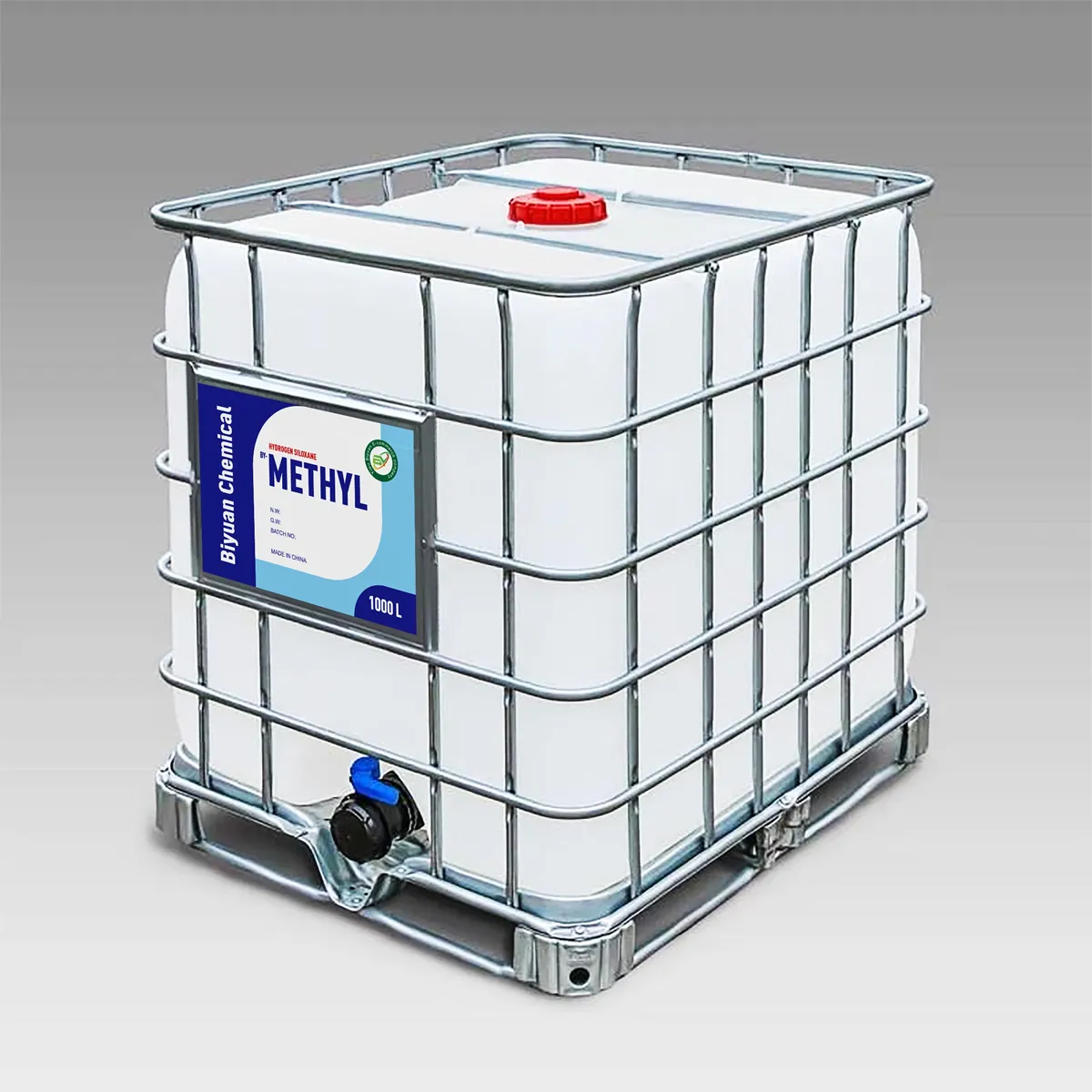
How to test the waterproofing efficiency of MH Silicone Fluid? - Methyl Hydrogen Silicone Fluid Factory
Methyl Hydrogen Silicone Fluid Factory
Methyl Hydrogen Silicone Fluid
Information Center
Everything you need to know about our products and company
Testing the Waterproofing Efficiency of MH Silicone Fluid: Methods, Standards, and Industry Applications
In industries ranging from textiles and electronics to construction and automotive, methyl hydrogen silicone fluid (PMHS) is a critical material renowned for its exceptional waterproofing capabilities. As a key component in coatings, sealants, and fabric treatments, evaluating its waterproofing efficiency is essential for ensuring product durability and performance. This article explores proven testing methodologies, industry standards, and practical applications backed by data, with insights into how manufacturers like Biyuan leverage advanced techniques to deliver reliable solutions.
Understanding Methyl Hydrogen Silicone Fluid
Methyl hydrogen silicone fluid is an organic silicon polymer characterized by active silicon-hydrogen (Si-H) bonds in its molecular chain. These bonds enable high reactivity under catalysts like platinum, allowing the fluid to form durable, cross-linked waterproof films on surfaces. Key properties driving its effectiveness include:
Hydrophobicity: With a water contact angle exceeding 100°, it creates a robust barrier against moisture penetration .
Thermal Stability: It performs reliably across a wide temperature range (-50°C to 250°C), making it suitable for extreme environments .
Chemical Resistance: The fluid maintains integrity against acids, alkalis, and UV exposure, ensuring long-term protection .
For B2B clients, such as a methyl hydrogen silicone fluid factory, these properties translate into enhanced product longevity and reduced failure rates in end-use applications.
Core Methods for Testing Waterproofing Efficiency
To validate the waterproofing performance of MH silicone fluid, manufacturers employ standardized tests that simulate real-world conditions:
Hydrostatic Pressure Test This method measures the material’s resistance to water under pressure. A sample coated with MH silicone fluid is subjected to increasing water pressure until penetration occurs. The pressure value (e.g., measured in mm water column) determines the waterproof rating. For instance, fabrics treated with MH silicone fluid often achieve ratings above 5,000 mm, indicating suitability for heavy rain conditions . Biyuan uses this test to certify products for outdoor gear and construction membranes.
Water Immersion Test Samples are submerged in water for specified periods (e.g., 30 minutes to 24 hours). Post-test inspection checks for water absorption, weight gain, or internal moisture. This is critical for applications like electronic components or seals, where even minor leakage can cause failures . MH silicone fluid’s low volatility (≤0.5% at 105°C) ensures minimal degradation during immersion .
Spray/Rain Simulation Test Using controlled spray nozzles, this test mimics rain or splashing. The coated surface is evaluated for water beading, runoff, or penetration. For example, in textile treatments, MH silicone fluid should cause water to bead and roll off entirely without soaking . This aligns with industry standards like ISO 4920 for textile water resistance.
High-Low Temperature Cycling Waterproof efficiency must endure temperature fluctuations. Samples are exposed to cycles of high (e.g., 80°C) and low (e.g., -20°C) temperatures, then inspected for cracks, adhesion loss, or reduced hydrophobicity. MH silicone fluid’s thermal stability ensures consistent performance, a key advantage for automotive or aerospace seals .
Industry Standards and Certifications
Adherence to international standards is non-negotiable for quality-conscious buyers. Key benchmarks include:
IP Ratings (IEC 60529): For electronics, MH silicone fluid-based coatings help achieve IPX7 (submersion up to 1m) or IPX8 (deeper water resistance) .
ASTM D3393: Guides testing for fabric waterproofing, where MH silicone fluid often exceeds baseline requirements due to its strong bonding with fiber hydroxyl groups .
ISO 10634: Evaluates material durability under accelerated weathering, ensuring MH silicone fluid retains properties after UV/moisture exposure .
Biyuan’s manufacturing processes comply with these standards, providing clients with certified, audit-ready materials.
Applications and Client Solutions
MH silicone fluid addresses critical pain points across industries:
Textile Manufacturing Pain Point: Traditional waterproof coatings wear off after washing or UV exposure. Solution: MH silicone fluid forms covalent bonds with fabrics, enabling >50 wash cycles without performance loss. It also enhances tear strength and softness . Biyuan’s formulations are used in sportswear and military gear for sustained waterproofing.
Electronics Encapsulation Pain Point: Circuitry damage from humidity or accidental spills. Solution: As a cross-linker in potting adhesives, MH silicone fluid creates insulating layers with volume resistivity >10¹⁵ Ω·cm, protecting devices in humid environments .
Construction Sealants Pain Point: Sealant failure under thermal expansion or water pressure. Solution: MH silicone fluid-based sealants maintain flexibility and adhesion (-50°C to 250°C), preventing leaks in joints and concrete .
As a leading methyl hydrogen silicone fluid factory, Biyuan distinguishes itself through:
Customized Formulations: Tailoring hydrogen content (0.1%–1.5%) and viscosity (10–1,000 cSt) to match specific application needs .
Quality Assurance: Rigorous batch testing via hydrostatic and temperature-cycle methods ensures consistent performance.
Technical Support: Biyuan’s engineers collaborate with clients to optimize parameters like catalyst ratios (10–50 ppm platinum) for faster curing or enhanced adhesion.
Conclusion
Testing the waterproofing efficiency of methyl hydrogen silicone fluid is a multifaceted process that hinges on standardized methods, real-world simulation, and adherence to industry benchmarks. For B2B buyers seeking reliable solutions, partnering with a proven manufacturer like Biyuan guarantees access to materials that not only meet but exceed performance expectations. Whether for textiles, electronics, or industrial coatings, MH silicone fluid remains a cornerstone of innovation in waterproofing technology.
MH Silicone Fluid: The Smart Material Revolutionizing Multiple Industries
In the evolving world of advanced materials, Methyl Hydrogen Silicone Fluid (PMHS) has emerged as a transformative smart material with applications spanning from textiles to aerospace. This specialized silicone variant, characterized by its active Si-H bonds, possesses unique prop.
Methyl Hydrogen Silicone Fluid in 3D Printing: Revolutionizing Flexible Manufacturing
The integration of Methyl Hydrogen Silicone Fluid into additive manufacturing represents a significant leap in producing durable, flexible, and complex parts. As a reactive organosilicon polymer, this material enables innovations across industries—from medical devic.
How MH Silicone Fluid Enhances Material Flexibility in Industrial Applications
Methyl Hydrogen Silicone Fluid (MHSF) is a versatile organosilicon polymer renowned for its unique molecular structure, which combines methyl groups (-CH₃) and reactive silicon-hydrogen (Si-H) bonds. Unlike conventional silicone oils, MHSF actively participates in crosslinki.
The Strategic Role of Methyl Hydrogen Silicone Fluid in Advancing Solar Panel Production
In the rapidly evolving solar energy sector, material innovation is key to enhancing efficiency, durability, and cost-effectiveness. Among these advanced materials, Methyl Hydrogen Silicone Fluid (Polymethylhydrosiloxane, or PMHS) has emerged as a critical high-p.
Methyl Hydrogen Silicone Fluid vs. Fluorosilicone Fluids: Key Advantages for Industrial Applications
In the world of specialized silicone fluids, manufacturers often face the critical choice between Methyl Hydrogen Silicone Fluid and fluorosilicone fluids. While both offer unique properties, understanding their comparative advantages is essential for .
Methyl Hydrogen Silicone Fluid vs. Dimethyl Silicone Oil: A Comprehensive Comparison for Industrial Applications
In the world of industrial silicones, two prominent materials stand out for their unique properties and applications: Methyl Hydrogen Silicone Fluid (PMHS) and conventional dimethyl silicone oil. While both share some silicone characteristics.
Proper Storage Solutions for Methyl Hydrogen Silicone Fluid: A Comprehensive Guide
Methyl Hydrogen Silicone Fluid (MH Silicone Fluid), a versatile polymer with high hydrogen content, is widely used in industries ranging from textiles and construction to cosmetics and electronics. Its unique properties—such as water repellency, thermal stability, and co.
Can MH Silicone Fluid Be Mixed with Other Silicone Fluids?
Methyl Hydrogen Silicone Fluid (MH Silicone Fluid), a specialized silicone product with reactive Si-H bonds, is widely used in industries like coatings, textiles, and mold-making. A common question arises: Can it be safely mixed with other silicone fluids? The answer depends on chemical com.
Essential Certifications Your Methyl Hydrogen Silicone Fluid Supplier Must Have
In the specialized chemical sector, selecting a certified supplier for Methyl Hydrogen Silicone Fluid is not just a procedural step—it’s a critical business decision that impacts product quality, regulatory compliance, and market success. This essential silicone polyme.
What is Methyl Hydrogen Silicone Fluid (MH Silicone Fluid)?
Methyl Hydrogen Silicone Fluid (MH Silicone Fluid), also known as polymethylhydrosiloxane (PMHS), is a specialized silicone-based polymer widely recognized for its unique hydrophobic properties and versatility in industrial and consumer applications. With the CAS number 63148-57-2, this flui.
In the evolving landscape of industrial materials, Methyl Hydrogen Silicone Fluid (also known as Polymethylhydrosiloxane or PMHS) has emerged as a premier choice for waterproofing applications across diverse sectors. This specialized silicone polymer offers a unique combination of reactivity, durability, and versatility that sets it apart from convention.
How Safe Is Methyl Hydrogen Silicone Fluid for Food Applications?
Methyl Hydrogen Silicone Fluid (MH Silicone Fluid), a specialized silicone-based material, has gained attention for its potential use in food-contact applications. But what makes it suitable—or unsuitable—for such uses? Let’s explore its safety, regulatory compliance, and practical appl.
Can Methyl Hydrogen Silicone Fluid Withstand Low Temperatures? Unveiling Its Performance in Challenging Climates
Methyl Hydrogen Silicone Fluid (MH Silicone Fluid) is a versatile polymer widely recognized for its adaptability to extreme conditions. One of its most critical attributes is its ability to function effectively in low-temperature environment.
Methyl Hydrogen Silicone Fluid (MH Silicone Fluid), a specialized type of silicone polymer, has gained significant attention in industries ranging from construction to personal care. However, a critical question arises: Is MH Silicone Fluid biodegradable? This article explores the environmental impact, sustainability, and practical applications of MH Si.
Methyl Hydrogen Silicone Fluid, a versatile compound widely used in industries such as textiles, construction, and cosmetics, requires specialized packaging to ensure safety, stability, and compliance. Understanding the available packaging options and their applications is critical for manufacturers, distributors, and end-users. Below, we explore tailored .
Methyl Hydrogen Silicone Fluid (MH Fluid), a versatile organosilicon polymer with reactive Si-H bonds, has become indispensable across industries due to its adaptability and functional versatility. While standardized grades are widely available, the ability to customize this material unlocks tailored solutions for niche applications. Here’s how MH Silicone.
Understanding the Molecular Architecture of Methyl Hydrogen Silicone Fluid
Methyl Hydrogen Silicone Fluid (MH Silicone Fluid), chemically known as polymethylhydrosiloxane (PMHS), is a specialized silicone polymer with a unique molecular structure that defines its exceptional properties. This article delves into its molecular composition, functional cha.
How Methyl Hydrogen Silicone Fluid is Engineered: Processes and Applications
Methyl Hydrogen Silicone Fluid (MH Silicone Fluid), a specialized silicone polymer, plays a pivotal role in industries ranging from textiles to electronics. Its unique properties—such as hydrophobicity, thermal stability, and cross-linking capabilities—make it indispensable fo.
Exploring the Role of Methyl Hydrogen Silicone Fluid in Cosmetic Formulations
Methyl Hydrogen Silicone Fluid (MH Silicone Fluid) has emerged as a versatile ingredient in the cosmetic industry, offering unique benefits that enhance product performance and stability. This high-purity organosilicon compound, characterized by its reactive Si-H bonds, is pa.
Methyl Hydrogen Silicone Fluid: Ensuring Safety and Performance in Food-Grade Packaging
The Critical Role of Methyl Hydrogen Silicone Fluid in Modern Food Packaging
In today’s competitive food industry, consumer trust in food safety is paramount, and packaging materials play a crucial role in maintaining this trust. Methyl Hydrogen Silicone Fl.
Title Interpretation & Executive Summary
The search for reliable PMHS (Polymethylhydrosiloxane) suppliers in North America requires a comprehensive understanding of both the technical specifications of Methyl Hydrogen Silicone Fluid and the stringent quality standards demanded by the automotive industry. This article explores how leading suppliers a.
Methyl Hydrogen Silicone Fluid in Medical Device Coatings: Ensuring Safety and Efficacy
Introduction
The use of Methyl Hydrogen Silicone Fluid (PMHS) in medical device coatings represents a significant advancement in healthcare technology, combining unique material properties with critical safety considerations. This specialized silicone fluid has ga.
Introduction
Methyl Hydrogen Silicone Fluid, an organic silicon polymer containing active silicon-hydrogen (Si-H) bonds, has gained significant attention for its unique combination of reactivity and stability. This versatile material, with its molecular structure featuring both methyl groups (-CH₃) and active Si-H bonds, demonstrates exceptional perfor.
Innovations in Low-VOC Methyl Hydrogen Silicone Fluid for Global Compliance
Introduction
The global demand for environmentally responsible chemical solutions is transforming the specialty chemicals sector. Methyl hydrogen silicone fluid (PMHS), a versatile organosilicon compound, is undergoing significant reformulation to meet increasingly stringen.
The Indian textile industry is undergoing a significant transformation as manufacturers increasingly adopt Poly Methyl Hydrogen Silicone (PMHS) technology to produce high-performance waterproof fabrics. This shift represents a strategic response to growing market demand for functional textiles that combine water resistance with breathability, durability, a.
The Middle East is undergoing an unprecedented construction renaissance, with mega-projects transforming the region’s landscape and creating massive demand for high-performance building materials. At the heart of this infrastructure boom is Methyl Hydrogen Silicone Fluid (PMHS), a versatile silicone-based compound that plays a critical role in modern.
The 2025 Sustainability Awards represent a pivotal moment for the chemical industry, particularly for manufacturers of Methyl Hydrogen Silicone Fluid (PMHS). As global demand for sustainable solutions intensifies, these awards recognize companies that are pioneering eco-friendly production methods, reducing environmental impact, and advancing green technol.
The global chemical industry is undergoing a transformative shift toward sustainable manufacturing, and suppliers of Polymethylhydrosiloxane (PMHS), commonly known as Methyl Hydrogen Silicone Fluid, are at the forefront of this change. Through strategic localization of production and technological innovation, these companies are significantly reducing thei.
The Critical Role of 1.59% Hydrogen Content in PMHS for Enhanced Waterproofing
Introduction
In the specialized world of silicone chemistry, the hydrogen content in polymethylhydrosiloxane (PMHS) serves as a crucial indicator of performance potential, particularly for waterproofing applications. While PMHS is widely recognized for its water-repellent .
Polymethylhydrosiloxane (PMHS), commonly known as Methyl Hydrogen Silicone Fluid, plays a critical role in enhancing the performance and stability of modern cosmetic and pharmaceutical products. This specialized silicone derivative offers unique chemical properties that make it particularly valuable in formulations where pH stability is essential for maint.
Global Surge in Methyl Hydrogen Silicone Fluid Demand Driven by Green Technology and Electronics
The global market for Polymethylhydrosiloxane (PMHS), commonly known as Methyl Hydrogen Silicone Fluid, is experiencing a significant upswing in 2025. This versatile organic silicone polymer, renowned for its exceptional thermal stability, chemical inertness.
Optimizing Industrial Cooling Efficiency: How Methyl Hydrogen Silicone Fluid Drives Energy Savings
In today’s energy-conscious industrial landscape, cooling systems account for a staggering 30-50% of total energy consumption in facilities like manufacturing plants, data centers, and chemical refineries. For operators, rising utility costs and regulator.
Methyl Hydrogen Silicone Fluid: The Unsung Hero Transforming Waterproofing in Textiles and Construction
In industries where durability and performance are non-negotiable—textiles and construction—waterproofing has long been a challenge. Traditional solutions often fall short: coatings peel, treatments wash out, or materials become brittle over time. Ent.
The convergence of Industry 4.0 and advanced materials like Methyl Hydrogen Silicone Fluid (PMHS) is revolutionizing the waterproofing industry. This transformation is driven by the integration of cyber-physical systems, IoT, and data analytics into manufacturing and application processes, leading to unprecedented levels of efficiency, quality, and sustain.
Polymethylhydrosiloxane (PMHS), commonly known as Methyl Hydrogen Silicone Fluid, and dimethyl silicone oil are two important organosilicon compounds with distinct properties and applications. While they share a basic silicone-oxygen backbone, the presence of reactive silicon-hydrogen (Si-H) bonds in PMHS fundamentally differentiates its performance and fu.
PMHS: Revolutionizing Aerospace with Lightweight Waterproofing Technology
Introduction: The Critical Role of Advanced Materials in Aerospace
The aerospace industry faces constant pressure to enhance performance, reduce weight, and improve sustainability. At the forefront of materials innovation is Poly(methyl hydrogen)siloxane (PMHS), commonly known .
Unlocking Precision Manufacturing: The Role of Methyl Hydrogen Silicone Fluid in 3D Printing and Electronics
In advanced manufacturing, material innovation often drives breakthroughs in product performance and process efficiency. Among the unsung heroes of modern industry, methyl hydrogen silicone fluid (also referred to as methylhydrogen polysiloxane.
Understanding PMHS Viscosity: Selecting the Optimal Grade for Industrial Applications
Introduction
Polymethylhydrosiloxane (PMHS), commonly known as Methyl Hydrogen Silicone Fluid, is a versatile organosilicon compound with unique properties that make it invaluable across numerous industries. The viscosity of PMHS plays a crucial role in determining .
Enhancing Automotive Paint Durability: The Role of PMHS Technology
In the automotive industry, the longevity and aesthetic appeal of paint finishes are critical factors that impact both vehicle value and consumer satisfaction. Achieving durable, high-quality automotive coatings requires advanced chemical solutions that promote superior adhesion between .
Introduction
Methyl Hydrogen Silicone Fluid (CAS No. 63148-57-2), also known as methyl hydrogen polysiloxane or PMHS, is a highly versatile silicone fluid widely used across multiple industries for its exceptional water repellency, thermal stability, and crosslinking capabilities. This clear, odorless liquid contains active silicon-hydrogen (Si-H) bonds.
Methyl hydrogen siloxane serves as a multifunctional additive that significantly improves processing characteristics and final properties in silicone rubber applications. This specialized silicone fluid features reactive Si-H groups that enable efficient cross-linking through hydrosilylation reactions with vinyl-functionalized silicone rubbers.
.
Medical-grade Methyl hydrogen siloxane serves as a versatile functional material in healthcare applications, combining high purity with reactive Si-H groups for enhanced performance. This specialized silicone fluid enables precise cross-linking in implantable devices, provides controlled drug release matrices, and creates anti-fouling surface coa.
Methyl hydrogen siloxane serves as a versatile functional additive in personal care products, leveraging its unique Si-H reactivity and silicone properties to deliver enhanced performance across various applications. This specialized material acts as an effective cross-linker in hair care products, creating durable yet flexible films that provide.
Methyl hydrogen siloxane serves as a innovative processing aid that enhances both the efficiency of leather manufacturing and the quality of finished products. This reactive silicone fluid improves leather softness and flexibility through effective fiber lubrication and molecular-level modification. Its unique chemical properties enable superior .

Contact Us
We're here to help with any questions or inquiries you may have
Contact Information
Address
No. 116, Jiangdong Street, Yiwu City, Jinhua City, Zhejiang Province,China